Short-term rent market in the face of regulatory changes

Short-term rental has become a more and more popular option of accommodation per night. Development of services such as Airbnb or Booking.com has strongly contributed to it. Since the very beginning of that type of accommodation, tourists have been very enthusiastic about it. This trend is apparent in big cities and touristic destinations. Business dependent on renting a flat for short period generates higher profits than a traditional long-term rental. This is a reason why the investors’ activity in this scope has increased significantly within few last years, both for the benefit of tourists and business travellers. Until now, this market has been growing. From year to year we could see the increase in number of short-term rental offers on booking platforms. With a new kind of activity on the market, new challenges appear as well. Lack of legal regulations, conflict with cities governments or neighbour issues on the short-term rent market are still being discussed and remain unsolved. Outbreak of the Coronavirus pandemic has been an additional, strong blow to be dealt with by the investors.

SHORT-TERM RENTAL AND THE LAW

On September 22, 2020 a judgement of the Court of Justice of the European Union (CJEU). concerning the short-term rental in France, was issued. The Court did not contested the French legal provisions, which give the authorities the possibility to impose regulations restricting the activities of people who handle the short-term rental. This issue concerned the provisions of the French Construction and Housing Code, which makes it possible to change a function of dwelling located in municipalities with more than 200 thousands inhabitants only after obtaining an appropriate permission from local authorities, under threat of penalty.

According to the French law, multiple short-term rental of fully furnished flat with no check in, is actually a change in function of a property. The CJEU judgement is a response to the doubts of the French national court regarding the compliance of those requirements with the EU law. In its judgement the Court stated: ‘Domestic rules, which require a special permission on short-term rental for clients without check-in, is consistent with EU law’. Thereby the Member States have the right to create regulations for people who want to rent their flat per day. As emphasized by the CJEU, implementation of restrictions on short-term rental will serve a housing policy in a given country and aims to counter a lack of apartments for long-term rental. In case of Paris, local government may impose penalties for not having a proper permit. The French case, which was placed on the CJEU’s list, gave the green light to other member states, including Poland, as our government is considering to enact restrictions regulating this kind of business activity.

A lot of European cities have brought their own rules into force. They concern, for example, number of days for which the premises can be made available in the form of short-term rental, location of the accommodation in a given area or duty to have an appropriate permission for conducting this type of activity. The group of cities with this kind of local regulations includes, apart from Paris, also Belin, Amsterdam, London, Barcelona and others.

As announced previously by the Polish Ministry of Development, the act regulating the short-term rental principles is to be developed. According to the assumptions, a central register of accommodation facilities will be created, which will include also a list of short-term rented premises. Their owners will not have to apply for a permit, but they will have to submit a notification under a penalty of a fine. The main aim of this law will be to counteract unfair competition from investors, who pose a threat to legally operating accommodation facilities. The register is planned to be published in 2021. It means that the current legal status of the short-term rental will probably remain unchanged during the 2021 tourist season. Short-term rental also causes controversy not only in terms of restrictions on business activity, but also of a tax nature. It turns out that currently many people, who purchase real estate for tourist rental, do not set up a business and do not pay the related taxes.

SHORT TERM RENTAL AND LOCAL GOVERNMENT

Raising popularity of short-term rental, mainly in attractive tourist destinations, not only harms the hospitality industry, but also, above all, ordinary inhabitants. Flats for short-term rental are very often located in multi-family residential buildings, where other people live their everyday lives as well. According to local government officials, dwellings rented for a short time should be classified as tourist facilities. Currently, there are no legal regulations allowing for such treatment. At the moment, this form of lease does not generate any tax revenues for municipalities. Local governments would like to introduce regulations, allowing to control the short-term rental, also in terms of finances. Currently there are no tools for the enforcement of local or health fees. Local government bodies may only call for its payment.

The city authorities, mainly in Krakow and Sopot, where the short-term rent market is quite significant, are in favour of introducing a register of short-term rental facilities. They also appeal to the government to accelerate work on new regulations. They propose that the solutions would work similarly to how they function in the field of counteracting alcoholism, which allow the local government to introduce local regulations, like limitations on sale of alcohol.

SHORT TERM RENTAL AND CORONAVIRUS PANDEMIC

On the real estate market, the coronavirus pandemic has hit the short-term rentals the fastest. As a consequence of introducing the state of epidemic threat in Poland, in the period from mid-March until May, there was a ban on short-term rentals. In this time lessors could rent an accommodation only for people who have been under quarantine. Therefore, most of landlords during this period remained without income.

The borders closure and the ban on flights, thereupon the inhibition of tourist traffic, was a strong hit to this market. Tourist were a main group of guests who rent flats for short time. Moreover, a significant number of companies stopped sending their employees on business trips because they converted into online meetings. Business travellers were also in a group of potential clients for short-term rent market.

With defrosting the economy and loosening the restrictions, the number of people who prefer short-term rental as an alternative to a hotel has increased. However, mostly they were local tourists. This year, the number of tourists from abroad, who constituted a significant percentage of guests in this kind of facilities, was clearly lower. Polish tourists chose to spend holidays in the country more often than they used to do so in previous years, but eventually the gap was not filled in 100%. As a result, decreases in annual profits from this premises should be expected. This can be a particularly difficult situation for those investors, who took out mortgage loans to buy apartments for short-term rental.

A new phenomenon on the market, which has recently arisen as an alternative to the short-term rental, is a medium-term rental. Some investors, who have rented flats per day, now make them available for potential tenants for a period of approximately three months. They do not want to rent them for a longer period because they hope that situation will improve. This option seems to be quite difficult to implement as hardly anyone needs a flat for a period of several months. Moreover, contracts concluded for such a period are often unfavourable for tenants, because the landlord can terminate it very quickly. This is due to the fact that landlords are mainly interested in rental for days, which is the most profitable for them.

A tourist voucher is a form of assistance for the domestic tourism sector, which can be used by landlords of short-term housing. However, appropriate conditions must be met for customers to redeem the voucher in a given facility. Payment with a voucher will be allowed only in premises rented by a business entity. Hence, landlords interested in getting profit from this program, will have to register their business activity. This can become a tool for reducing a ‘shadow economy’. In this way short-term rental mark may be regulated.

It should be noted that families with children more often choose holiday destinations at the seaside or in the mountains than in big cities. That is why owners of the apartments for short-term rent located in popular holiday destinations are more likely to benefit from the tourist voucher programme than those, who offer a short-term rent big cities.

CONCLUSIONS

Short-term rental is dependent on many fluctuations, which negatively affect the business. Competition, seasonality, legal regulations, even unpredictable situations such as the coronavirus pandemic undoubtedly inhibited the aspirations of those, who wanted to invest their capital in short-term rental. However, this sector will continuously grow. Certainly, over time the new regulations at the statutory level will be brought into force. Probably local authorities will have a lot of autonomy in relation to detailed solutions. As far as now, their entry into force seems not quite imminent.

Agnieszka Bartoszewska
Real Estate Market Analyst

Waiting for discounts – about the housing market amid the coronavirus pandemic

Quite recently, the housing market in Poland was recording an impressive boom and the prospect of a correction seemed remote. Dwellings prices kept rising, flats had been sold really quickly and developers willingly started new investments. But then the coronavirus-related restrictions came, the entire economy unexpectedly stopped and all real estate participants held their breath waiting for what would happen next. Property prices have been a hot topic since the beginning of the pandemic. Potential home buyers were looking forward to discounts and bargains. Meanwhile, summer months did not bring a significant change on the housing market. After a temporary stagnation in April, resulting directly from a lockdown that made transactions impossible to conclude, the market has been slowly stabilizing.

BUYERS’ RESTREINT

Undoubtedly, in Q2 2020 the demand for housing has declined significantly. In some cities, the number of concluded transactions was lower even by 60% than in the previous quarter. Many potential buyers decided to postpone their decisions, fearing of a serious economic crisis in the country, losing their jobs and the ‘second wave’ of COVID-19, but at the same time expecting some price decreases. And this was quite rational. Another, quite numerous group that refrained from housing purchases were people who lost their creditworthiness due to the tightening of banks’ lending policies. At the same time, cancellation of lectures at universities and the return of students to their hometowns, as well as a decrease in tourist traffic and thus the interest in short-term rental (for days), might slightly limit the interest in purchasing dwellings for investment purposes.

Theoretically, a lower demand results in a lower prices. However, it has not happened so far. Banks are slowly easing the lending conditions and consumer confidence index is increasing. After a significant decline in dwellings interest in March and April, a systematic improvement has been observed since May. According to Google Trends, the popularity index of ‘flat’ in the Google search engine in the six largest Polish cities at the beginning of September this year was even higher than in 2019 – record-breaking year in terms of demand.

CHART 1. POPULARITY INDEX OF ‘FLAT’ IN THE SIX LARGEST CITIES IN POLAND

source: AMRON Centre based on Google Trends data (average for the 6 largest cities: Warsaw, Wroclaw, Poznan, Kraków, Gdansk, Lodz) – as for September 7, 2020

HOUSING MARKET RECOVERY

After a temporary weakening in housing market results in April, the following months were the time of catching up. According to data published by the Central Statistical Office, the results of housing market in June and July returned to the average values recorded in the last record-breaking year. Only in July this year constructions of 21.7 thousand apartments were started – by 60% more in comparison to April, reaching the result noted in the same month last year. In July, developers started construction of 12 thousand dwellings – twice as much as in April 2020 and by 1% more than in July 2019. In the period from January to July 2020, construction of 122 thousand dwellings was started, i.e. by 11% less in relation to the same period of the previous year, while developers recorded a decrease by 16% and started the construction of 66 thousand flats in the same period. However, it can be assumed as a good result.

The results in the number of construction permits issued were also really good. In June and July it amounted to the level close to the monthly results recorded in this category last year (despite the fact that July brought a slight decrease on a monthly basis). From the beginning of the year to July 2020, 147 thousand building permits were issued, i.e. only by 4.5% less than in the corresponding period of 2019. In the same period, developers obtained 88 thousand permits, which was by almost 5% less on an annual basis. So the results of housing market have actually returned to pre-lockdown levels.

CHART 2. DEVELOPERS’ SECTOR PERFORMANCE

source: Central Statistical Office

DYNAMICS OF PRICE GROWTH SLOWED DOWN

Price decreases were often mentioned as one of the inevitable effects of the coronavirus pandemic, but it was not visible so far, both in offers and transactions. The lockdown in March and April limited the activity on the housing market for a while and stopped price increases, but no significant decreases was observed.

A considerable drop in the number of transactions concluded on the housing market in the first months of the pandemic forced the supply side to take decisive action. Developers reacted much faster, but they have got more tools to fight for customers than the sellers on secondary market, so did not have to lower dwellings prices. Developers offered, among others, promotions such as ‘storage room for free’, better purchase conditions (e.g. favourable payment schedule: 10/90, 20/80 or 30/70, extension of booking period, the possibility of cost-free cancellation of booking) or temporary, small price reductions for selected, less attractive premises. Moreover, there is no space for price decreases on primary market currently, because building land prices continue to rise, as well as labour and building materials costs. Sellers on secondary market are generally less flexible and they react later, strongly defending prices of their apartments. Good bargains although could be found there as well, but quite rarely.

CHART 3. AVERAGE TRANSACTION PRICES PER 1 SQM OF A HOUSING UNIT ON SECONDARY MARKET IN THE LARGEST CITIES

source: AMRON Centre

Temporary and minimal declines in the average transaction price of 1 sqm of dwellings on secondary market were recorded only in April this year – in Wroclaw a decrease by 1.90% was noted, in Poznan by 1.77% and in Warsaw by 0.66% in relation to the previous month. Currently, in large cities rather a stabilization of housing prices with a slight upward trend is noted. During the summer months, minimal increases (by 1-1.5%) in the average transaction prices per 1 sqm on secondary market were noted in the largest Polish cities. A slightly higher increase was recorded only in Lodz, where the average transaction price of 1 sqm increased in August this year by 2.96% in comparison to July. However, it should be mentioned that the analysed volumes in recent few months were low, as the number of conceded transactions has decreased significantly, and data from the real estate market are delayed. Therefore, a view of the past few months on the market is not complete yet.

Currently, no indications of sudden change anytime soon are observed on the market, although situation is uncertain. The economy is recovering, the activity of the housing market participants is steadily growing, and slight changes in prices recorded so far on both primary and secondary markets cannot have any real impact on potential buyers. Of course, there are many unknown factors, and at the moment it is impossible to predict the ultimate impact of the pandemic on the whole economy. The real estate market is characterized by inertia, so there is still a risk that in the long term perspective, the factors causing the decline in real estate prices will prevail. Further development of the situation not only on the housing market, but also in the entire economy, will largely depend on a possible ‘second wave’ of COVID-19 and the related restrictions. Only a large disproportion between the supply and demand can convince sellers to change the price policy, but even in such a situation we do not expect significant decreases, but only by a few percent.

Agnieszka Pilcicka
Senior Real Estate Market Analyst

Energy-saving houses

Increases in energy prices and heating costs of buildings significantly influence the growing interest in modern technologies that allow to reduce these expenses. In order to lessen the house’s demand for heat, it is good to get a closer look at the concept of an energy-efficient building.

ENERGY-SAVING HOUSE

200907_Energy-saving_houses_DG_rId4

source: https://www.dobrzemieszkaj.pl

The operating costs should be considered as early as at the stage of choosing a house project. Then we should think about how to locate the house on the plot and what solutions to apply to reduce heating bills during the operation.

In order to increase the energy efficiency of the house it is worth to locate the day zone (living room and dining room) from the south or south-west side of the plot. Such a location and the use of large glazing provide the increased thermal comfort of the building. Rooms such as bathroom, dressing room, locker and garage do not need much light, so they can be located on the north side. An optimal location for a bedroom and a kitchen is the east side, because these rooms will be sunny in the morning and cooler in the evening. The house should be divided not only into functional but also thermal zones. The temperature difference between the adjacent rooms should not be too big.

If we want to reduce our heating bills, we should opt for a house with a small area. A smaller house means less heat loss, which is related to the surface of the partitions, through which it flows out. The surface of the partitions also depends on the shape of the house. The shape of the energy-saving building is characterized by a simple, compact body, usually based on a rectangular plan. It is a good idea to check the shape factor of the building (A/V). It is the ratio of the area of all partitions to the volume of the building. The value of the coefficient should be as small as possible.

An energy-efficient house should be at least one-floor building, because a significant part of the energy escapes through the roof. Such a solution will help to minimize heat loss, which depends on the ratio of the roof area to the usable area – it is the largest in one-storey houses. The roof of the low-energy house should be straight and flat, without any kinks that would cause the biggest heat loss.

It is essential to use appropriate building materials that will protect the house from heat loss. During the construction of an energy-efficient house, materials with high thermal mass (e.g. brick, concrete and stone) are used. However, materials with low thermal mass, such as steel and wood, are not suitable.

It is very important to ensure an adequate degree of thermal insulation. In order to prevent additional heat from being given away to outside through external partitions (walls, windows, roof and floor), whether thermal bridges (incorrectly thermally insulated fragments of external partitions), it is necessary to ensure that the insulation is tight. Insulation materials are constantly being improved to have less thickness and better properties.

When choosing an energy-efficient house, it is worth to decide on additional internal installations, which increase the energy efficiency of the building and have a large impact on reducing the costs associated with its heating. Such solutions include solar installations, mechanical ventilation and floor heating. In energy efficient houses, modern devices with high efficiency are the source of heat (e.g. heat pumps).

An important aspect is the heating energy demand – how much energy is needed to provide comfortable living conditions. According to the current regulations, an energy-efficient house needs a maximum of 70 kWh/sqm per year. This is 50 kWh/sqm less than a traditional single-family house, but 55 kwH/sqm more than a passive house. However, it is worth remembering that passive houses acquire energy passively, without additional installations.

The cost of an energy-efficient house is much higher than the construction of a traditional house. However, the investment costs will pay back in a few years through low operating costs. Energy efficient house is not only a fashionable construction. With constantly growing bills for heating it becomes a great idea to save money. It seems very probable that energy-saving houses will soon become a new standard.

Dominika Gocalińska
Customer Relations Specialist

Investing on the real estate market during the pandemic

Real estates are perceived as good investment objects. According to the average Pole, who does not invest professionally in shares, bonds or his own company, investing on the real estate market is the best and the safest way of making a profit. The current interest on deposit accounts in Polish banks is at a record low level and does not protect savings from inflation. Therefore it is not surprising that Poles are interested in alternative forms of investment and very often choose real estates due to relatively low risk of loss. However, the decision to invest in these assets should be preceded by a thorough analysis of market characteristics and an understanding of its advantages and disadvantages. Unfortunately, in times of the COVID-19 pandemic, when an increased risk of panic and strong emotions must be taken into account, investing without a prior analysis may be highly inefficient.

Has the pandemic caused the decrease in transaction prices on the real estate market? How is the rental market in Poland currently shaped? What are the ways to invest in real estate? This article answers the above questions.

THE SITUATION ON THE REAL ESTATE MARKET IN POLAND

Real estate professionals’ forecasts for fluctuations in transaction prices after the outbreak of the pandemic were extremely different. Shortly after the introduction of the government restrictions some of them predicted a price cut of 10-15%. The developers were convinced that the declines would not occur or, if any, would be insignificant. The president of the AMRON Centre, Jacek Furga, Ph.D. believes that no major changes on the housing market should not be expected any time soon. The price correction may take place at a later stage in response to the worse financial situation of Poles. The subprime crisis (2007-2009) had reversed price drops by 20%, but it is unlikely to occur now. In Poland between 2005 and 2008 we observed a speculative bubble and more than 100% price increases. In contrast, the growth in transaction prices over the last few years is less spectacular and does not exceed an average of 50%. In the current economic situation, large falls in house prices could only occur with both a huge economic collapse and very high interest rates. However, it probably will not happen.

The absence of large price reductions on the housing market does not mean that there may be no opportunity to buy a property at the non-market price. Bargain purchase might happen regardless of the crisis. Currently it is much more likely to find an attractive offer on the commercial real estate market, where 50% drops are being observed in some locations.

Real estates in Poland are expensive for most citizens. The housing accessibility index, which reflects the ratio between the average monthly salary and the average transaction price, is very low compared to other European countries. Despite the improvement in labour market conditions in recent years and the systematic increase in the housing accessibility index, the average Pole has to make savings for a long time or take out a mortgage loan to purchase a property. Moreover, the rental market in Poland is relatively small.

THE RESIDENTIAL RENTAL MARKET IN POLAND

The percentage of tenants in Poland is small and amounts to approx. 5%. Although the popularity of tenancy is growing, the need to own a property is exceptionally strong in our country. The fact that the rental market in Poland is quite underdeveloped does not mean that prices are low. In the largest Polish cities, the ratio between the average rent and the average transaction price of residential property as well as the average monthly salary is one of the highest in Europe.

Is it a good solution to rent a property in Poland? To answer this question, it is worth analysing the level of rental profitability. This index can be counted in different ways. The simplest is the quotient of net income from real estate to its value. It is estimated that the rental profitability in the largest agglomerations amounts to approx. 3-5% net per year. It is worth mentioning that several years ago it accounted for approx. 8-10%. The investor must remember that it is important to take into account notary services, taxes, insurance, administrative fees, and also the costs of maintaining the apartment in good condition, ageing of the building and the potential vacancies. The average rate of return on real estate investment is currently much higher than the interest rate of bank deposits. However, investors can earn much more for example on the stock market or by investing in gold, but this is obviously more risky.

Investing in flats for rent usually does not generate huge profits, as it is sometimes mistakenly believed. Competition on the residential market is growing because currently short-term rentals are offered as long-term. In addition, there is no guarantee that the property occupancy will happen quickly because government restrictions related to the pandemic may return. Investors should also remember about the cost of maintaining the apartment in good condition and the possibility of unforeseen renovation.

CHART 1. FORMS OF REAL ESTATE INVESTMENTS


200824_Investing_on_the_real_estate_market_during_the_pandemic_ES_rId7


source: own study

OTHER FORMS OF REAL ESTATE INVESTMENTS

Apart from the most popular investments in flat for rent, there are also other forms of investing in real estates. One of them is Flipping, which was elaborated in the AMRON Centre article written by Agnieszka Bartoszewska entitled “House Flipping – an unexplored phenomenon on the real estate market”. The alternative is also an investment in aparthotels, but due to the crisis in the tourism sector, we cannot expect immediate returns. An interesting option is Crowdinvesting, which consists in investing a small amount of money in the form of partnerships. The biggest advantages of social investment are: low risk of capital loss, no need to service tenants and the possibility of withdraw money at any time. Another alternative is subletting a property. It consists in signing a tenancy agreement and then renting the property to another person at a higher price. Such an undertaking must obviously be agreed with the property owner. Some investors search for apartments with adverse layout of rooms, make purchases, and then divide them into smaller ones. Thanks to this, they can rent the premises to more tenants and simultaneously earn more.

SUMMARY

Investing in real estates should be preceded by a thorough analysis of the local real estate market. When considering buying an apartment for rent, it is worth deciding which segment of the market we are interested in – renting for a family with children, students or other tenants. The analysis of the profitability of such an investment must take into account the potential vacant space during the holidays in case of students or probably a long rental period and lower renovation costs for families with children. It should also be remembered that housing prices in various market segments react slightly differently to changes in the economic situation. In addition, the stability of the real estate market may differ depending of the region. This is an important matter in case of exit from the investment. Before deciding to put capital into real estates, it is worth seeking information from reliable sources or from real estate professionals.

Ewelina Staruch
Real Estate Market Analyst

H-frame and large-panel – technologies for the construction of multi-family buildings in the second half of the 20th century

The H-frame and the large-panel are two competitive technologies for construction of multi-family buildings, that were used in Poland in the second half of the 20th century. Both are based on the use of prefabricated and repeatable elements that make the construction of the building process much faster and less complicated than other technologies. The need to speed up the construction process appeared in Poland after the end of World War II, when the vast majority of the population was deprived of their homes because of war damages. Social policy of the Polish People’s Republic was based, among others, on the rapid restoration and provision of housing resources for society. Prefabricated technologies were used to achieve this goal. What is the difference between large-panel buildings and H-frame buildings?

H-frame

The H-frame technology is based on creating the structure of the object that consists of a prefabricated reinforced concrete frame, resembling the stretched letter H.

PICTURE 1. H-FRAME CONSTRUCTION IN MULTI-FAMILY BUILDINGS (ELEMENTS: 1 – POLE, 2 – BOLT, 3 – COLUMN CONNECTIONS, 4 – BOLT CONNECTIONS, 5 – INTERMEDIATE BOLT)

200714_H-frame_and_large-panel_technologies_BM_rId7

Source: http://www.relaiscdo.eu/budownictwo/budynki-zelbetowe-prefabrykowane-cz-1 (access: 15.07.2020)

The reinforced concrete skeleton is the supporting structure of the building, which is then filled with bricks or hollow bricks. Visible elements of the structure (columns, beams) are a distinctive element, but also a main disadvantage of apartments in such buildings. The characteristic feature of buildings constructed in this technology is lack of load-bearing walls inside the apartments, which is an invaluable advantage that enables any arrangements of their interiors. Other significant advantages of construction in this technology are: high durability, good acoustics and thermal insulation. It is also worth to mention that the current trends in development constructions refer to the H-frame technology. Its contemporary continuation can be seen in a variant of the monolithic technology, in which a reinforced concrete skeleton structure is used on the construction site.

LARGE-PANEL

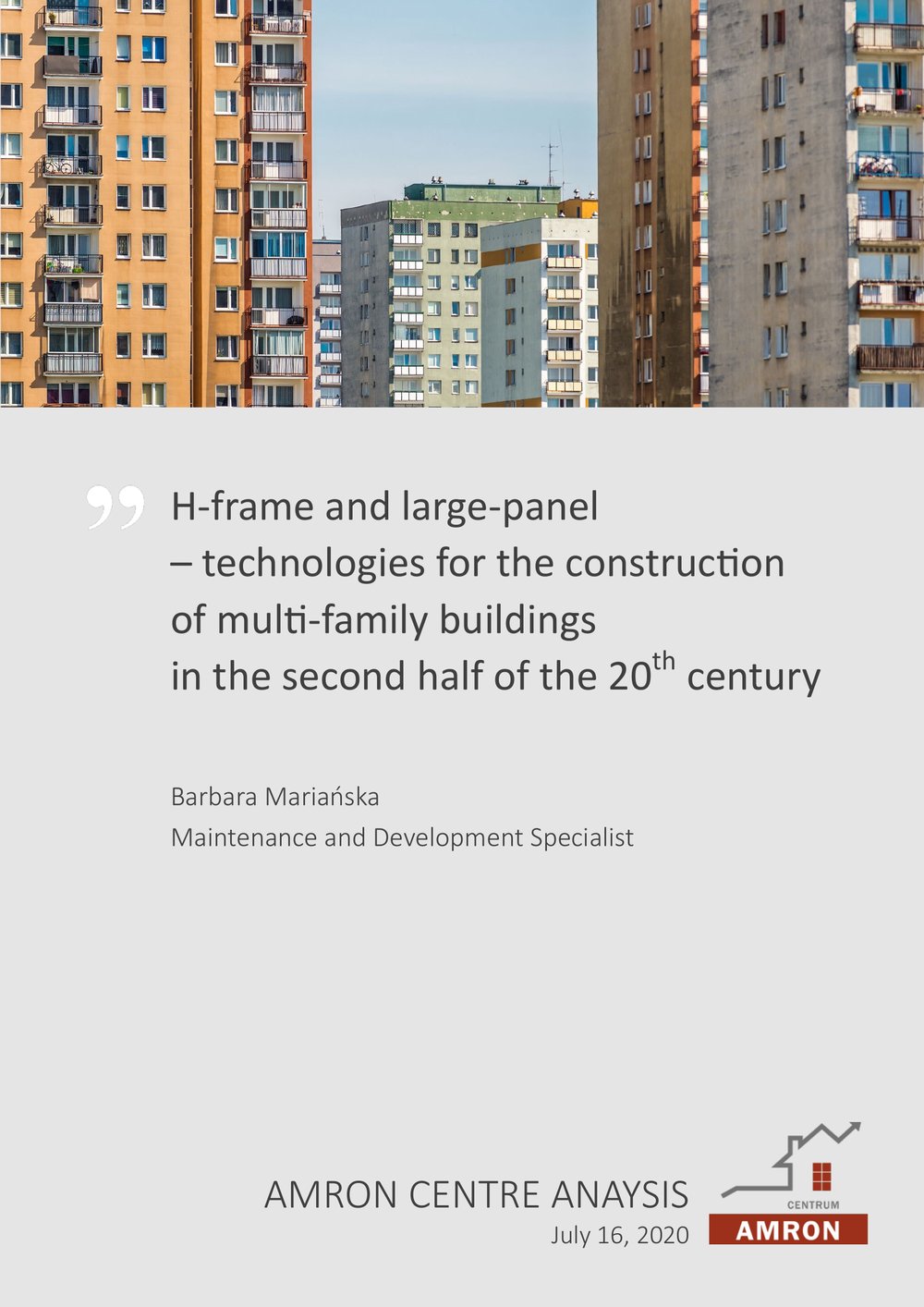
The construction based on the technology of large-panel was based on the assumption that the buildings were erected from ready-made concrete prefabricates. The individual concrete elements were manufactured in the so-called ‘house factories’ and then transported to the construction site. In large-panel systems, all elements, such as external walls, ceilings, as well as partition walls, load-beating walls, stairs and elevation shafts, were produced. Compared to the H-frame, the large-panel is characterized by low quality and imprecise workmanship. Leaks at the joints of the panels also have an impact on problems with thermal insulation or moisture in buildings. The durability of large-panel buildings at the time of their construction was estimated as 40 – 50 years.

PICTURE 2. CONSTRUCTION OF A MULTI-FAMILY BUILDING IN LARGE-PANEL TECHNOLOGY

200714_H-frame_and_large-panel_technologies_BM_rId8

Source: http://www.administrator24.info/artykul/id5106,wielka-plyta-do-modernizacji (access: 15.07.2020)

The interiors of apartments in large-panel buildings are difficult to arrange because of the load-bearing walls that cannot be demolished. Considering that apartments in large-panel buildings were characterized by a large number of small, dark and low rooms, the lack of the possibility of rearranging their interiors may effectively discourage potential buyers on the secondary market from choosing such an apartment. A characteristic phenomenon associated with large-panel buildings is also the deterioration of the quality of newly erected buildings over time. Increasingly meticulous maximization of construction savings meant that at the end of the 20th century, apartments with dark kitchens (without access to daylight) were build, worse-quality finishing materials were chosen (e.g. parquet was abandoned in favour of PVC tiles, and in the following years it was the standard to hand over flats for use without finished floors) and the degree of furnishing of apartments had been increasingly limited. This means that in case of large-panel buildings, there are large differences in the quality and standard of buildings depending on the year of construction.

Summary

Buildings constructed in the H-frame technology are much more durable, easier to arrange (e.g. during renovation) and cheaper to operate, compared to large-panel buildings. Load-bearing walls occurring in the interiors of narrow and low apartments in large-panel buildings make it impossible to adjust the apartment layout to your own needs. Problems with thermal insulation of large-panel buildings mean that their residents have to bear much higher costs of heating their own premises. It is also worth to mention that complexes of buildings constructed in both technologies even until the 1980’s did not provide the needs related to private transport, which is widespread nowadays. This problem concerns the insufficient number of parking spaces for residents in the immediate vicinity. The fact that the surrounding area has been already intensively developed makes it difficult to designate areas for the location of new parking lots. Increased traffic is also associated with the problem of narrow residential access roads, on which parking cars additionally hinder the movement for both pedestrians and drivers. However, it is worth noting that the greatest advantage of housing estates built in the discussed technologies is their location. When the buildings were constructed, their location did not seem attractive. These were often areas with no necessary infrastructure or service facilities for residents. However, now their spatial context and location have significantly changed. The spatial development of cities has resulted in the fact that, over several decades, the housing estates constructed with the use of prefabricated technologies have gained a good location in the urban space. These estates are well-connected to the city center, with extensive local infrastructure and service and commercial facilities, which may constitute a competitive advantage over new development investments located on the city outskirts.

Barbara Mariańska
Maintenance and Development Specialist
Changes in Geodetic and Cartographic Law

On April 30, 2020, the Act amending Geodetic and Cartographic Law and some other acts was published. The main reason of the amendment was to specify the rules of geodetic and cartographic works performance and to clarify legal relations between the contractors of the works and the geodetic and cartographic administration bodies. In addition, changes were aimed to facilitate the implementation of geodetic and cartographic works, including reduction of the number of bureaucratic procedures and, consequently, accelerate the entire investment and construction process.

A significant change introduced by the new law is the abolition of the obligation to report construction objects stakeouts to the Poviat Starosty. Furthermore, in case of any geodetic works, an obligation was introduced to appoint geodetic works manager, who holds professional qualifications in the field of geodesy and cartography. The amendment simplified the method of charging fees for the documents surveyor needs to work by introducing a flat-rate fee for full access to the materials of the National Geodetic and Cartographic Resource (PZGIK). PZGIK’s data and documents are made available to the contractors of surveying works after receiving a notification about the commencement of works, without the need to apply for each of the data separately. In addition, the new regulations introduce the obligation to allocate the income from maps and other PZGIK materials sale to finance the tasks of the National Geodetic and Cartographic Service. Commencement of geodetic works before submitting the notification of their intention to the starost is a new possibility. However, the notification should be made no later than 5 working days from the date of beginning of works.

The amendment also relates to the land and building register: the necessity to submit an application to update information in the register has been withdrawn and the register’s information scope has been reduced. New regulations provide for updating the information in the land and building register records on the basis of materials in PZGIK ex officio, by the means of material and technical actions. The information gathered in other state registers was excluded from the land and building register, among others data on lease agreements, entries in Register of Historical Monuments, information whether the area is covered by a form of nature protection and data on the cadastral value of real estate.

Changes also included the procedure of obtaining professional qualifications in the field of geodesy and cartography. In the event of death of person supervising the work during apprenticeship, the person carrying it out may confirm the completion of the apprenticeship just by submitting a declaration.

The amendment to the Act on Spatial Planning and Development introduced the obligation to create, maintain and update an electronic versions of spatial data sets for all types of spatial planning acts. New regulations will apply to spatial development plan, study of the conditions and directions of spatial development and the local spatial development plan. New provisions apply to both new acts and acts already in force. What is more, the minimum scope and method of keeping spatial data sets for spatial planning acts were specified. The data so far available on request and for a fee will be made available free of charge on the website www.geoportal.gov.pl. These will include topographic data, orthophotomap, LIDAR measurement data, Digital Terrain Model, data on geodetic control networks, basic data on plots and buildings. The introduced solutions are to create national consistent databases and sets describing the scopes of acts of spatial planning and related documents. According to the Ministry of Digital Affairs and the Ministry of Regional Development, the universal access to data will be a foundation for innovative goods, services and products, stimulating the development of the economy by creating new work places and encouraging investments in business and industry.

Most of the amended provisions of the Geodetic and Cartographic Law will come into force three months after its publication in the Journal of Laws, i.e. on July 31, 2020, except for the provision introducing the obligation to allocate income from the sale of maps and other PZGiK materials for financing the tasks of the National Geodetic and Cartographic Service, which will come into force on January 1, 2021. New provisions related to the field of digitization of spatial planning will enter into force on October 31, 2020 and the implementation of sets of existing planning acts is to be completed by the end of April 2022. Currently, the Ministry of Regional Development is engaged in consultations of a draft regulation on spatial data sets and metadata in the field of spatial development. The draft regulation specifies a new classification of spatial planning documents and the obligatory data, which will have to be collected.

Most of new regulations were aimed to facilitate access to data, and in practice, probably to accelerate the implementation of geodetic and cartographic works performed as part of the investment process. Reducing the formalities between the surveyor and the Poviat Starosty will allow the surveyor to obtain the necessary documents faster. The proposed changes are to shorten the time needed to perform geodetic works as part of the ongoing investments from 2 months to 18 days. The application of the regulations in practice will verify whether the introduced changes significantly improve the investment process.

Marta Polkowska
SARFiN System Data Administrator
Maintenance and Development SpecialistAMRON Centre

New banks’ lending policy – about consequences of the pandemic on housing loans market

Quite recently, the housing market was booming and another record-breaking results were noted in mortgage sales. Increasing wages, stable situation on the labour market and low interest rates encouraged to purchase dwellings and take out housing loans. However, the appearance of the ‘black swan’ in March 2020 – the new coronavirus disease, changed the situation radically. Banks reacted immediately to the risk increase due to uncertainty about the economic effects of COVID-19 epidemic, and significantly tightened lending conditions in March. At present, the lockdown is over and interest in dwellings purchasing is slowly growing, but the reality is now quite different.

Lower cost of a housing loan

Banks increased loan margins due to weaker forecasts regarding the economic situation of the country. At the beginning of June, the average margin of a model mortgage loan (in amount of PLN 300 000, at the LtV ratio of 75% and granted for the period of 25 years) amounted to 2.25%, which meant an increase by 0.13 p.p. comparing to February 2020, the last month before the pandemic.

However, the Monetary Policy Council reduced the basic interest rates of the National Bank of Poland three times (by decisions of March 17, April 8 and May 28 this year) by 140 basis points. Thus, the reference rate decreased from 1.5% to historically low level of 0.1%, and WIBOR 3M at the beginning of June 2020 amounted to only 0.27%. Consequently, despite the increase in loan margins, the average interest rate of a model housing loan amounted to 2.53% in June (by 1.32 p.p. less in relation to February) and instalments of PLN loans diminished to historically low levels. The instalment for a model loan (with assumptions mentioned above) decreased by approx. PLN 200 in comparison to February (from approx. PLN 1 600 to PLN 1 400 per month).

CHART 1. AVERAGE MARGIN AND INTEREST RATE OF A HOUSING LOAN

* mortgage loan in amount of PLN 300 000, LtV ratio 75%, lending period 25 years

source: AMRON Centre based on banks’ credit offers

Suspension of loan repayments

Instalments will decrease in a few months, when the repayment schedule is changed. Those borrowers, who already have financial problems, may benefit from banks’ offer to postpone repayment of housing loans for a period of up to 3 or 6 months. This possibility provides an actual support for borrowers who have lost the job and financial stability, but it should be remembered that this solution is not for free, because the amount of the remaining loan instalments will increase or the total loan repayment period will be extended.

According to data of Credit Information Bureau as of May 25, 2020, 130 thousand borrowers have already postponed repayment of instalments.

Higher own contribution

Low interest rates encourage to take out housing loans, but on the other hand the situation on labour market is uncertain and several large banks, trying to protect themselves against the negative effects of a pandemic, have decided to increase the minimum own contribution. Bank Pekao increased the required own contribution to 15% (previously 10%), PKO BP and Pekao Bank Hipoteczny – from 10 to 20%, and ING Bank Śląski, BOŚ Bank and BPS grant loans for only 70% of the property value (previously 80%). The own contribution in BNP Paribas, Citi Handlowy and Bank Pocztowy remained at the level of 20%.

Certainly, it is still possible to finance the purchase of real estate by a mortgage loan with a 10% downpayment, but the number of banks with such offer is much smaller than 3 months ago and the lending criteria are more stringent. Currently, only 5 commercial banks grant such mortgage loans: Alior Bank, Credit Agricole, mBank, Bank Millennium and Santander Bank Polska. However, most banks require additional conditions, for example Santander Bank Polska offers housing loans with only 10% own contribution exclusively to its current customers, other customers can get a loan with 20% downpayment.

TABLE 1. MINIMUM OWN CONTRIBUTION IN JUNE 2020

Bank Minimum own contribution
ING Bank Śląski 30%
BOŚ Bank 30%
BPS 30%
PKO BP 20%
Pekao Bank Hipoteczny 20%
BNP Paribas 20%
Citi Handlowy 20%
Bank Pocztowy 20%
Pekao 15%
Alior Bank 10%
Credit Agricole 10%
mBank 10%
Bank Millenium 10%
Santander Bank Polska 10%

source: AMRON Centre based on banks’ credit offers

Tightened lending conditions

Concerned about the economy standing and the solvency of borrowers, banks, in addition to increased own contribution requirements, also became more conservative in creditworthiness calculations. The requirements for granting mortgage loans for persons running own business or employed under a civil contracts or fixed-term contracts have been tightened, some banks even do not accept such forms of employment. Particular attention is also paid to the sector of borrowers employment. Economic sectors most affected by pandemic (e.g. hospitality, tourism, transport, gastronomy) are presently on the increased-risk list, and people employed in those sectors have limited access to housing loan.

The loan interest rate is lower, but access to mortgage loans is more difficult. If such stringent criteria for new housing loans are not eased, the housing demand may decrease, because some potential buyers will not be able to get financing.

Decline in demand

The first negative consequences of the COVID-19 attack on the housing loan market were already visible in March this year. Many buyers withdrew from the transaction because they lost their creditworthiness or it decreased significantly. Lockdown, tightening of banks’ lending policy and deterioration of the situation on the labour market resulted in housing loans demand (expressed as the value of BIK Index – Demand for Housing Loans, informing about the annual value changes of applied housing loans ) decrease in April 2020 by 27.6% in comparison to the same month of the previous year. According to AMRON Centre data, the number of concluded loan agreements diminished by 20.7% in April (yearly), and the value decreased by 11.3%. In May, a slight improvement was recorded – BIK Index amounted to -24.2%, i.e. by 3.4 p.p. more than in April, however, it is far too early to forecast whether this means a return to the upward trend.

CHART 2. HOUSING LOANS DEMAND (ANNUAL RATES)

source: BIK

May was the first month of stepwise reducing the restrictions implemented by government to stop the spread of COVID-19. Consumer confidence was improved by defrosting the economy, government support in the form of anti-crisis shield and the possibility of temporarily postponing the loan repayment, however, job insecurity and fear of the future is still strong. On one hand, housing loan costs are record-low, there is no attractive possibilities of investing and inflation is high, but on the other hand people are afraid of losing their jobs and access to housing loans is difficult. It is therefore difficult to say, which side will prevail and what the housing market will look like in the post-COVID time. It will depend on whether the second wave of pandemics will return in the autumn, how long the period of postponing purchases will last, how much and how fast the level of unemployment rate and inflation will increase, and finally how much the money supply will be increased by the government and the NBP.

Agnieszka Pilcicka
Senior Real Estate Market Analyst

Construction of a holiday house

Due to an outbreak of a COVID-19 epidemic, it is easy to notice some changes in preferences of the housing market participants in Poland. Obligatory lock-down resulted in increased popularity of single-family houses, as well as construction and recreation plots. One of the possible option of ’escaping‘ from the city and the flat, where all inhabitants are forced to spend 24 hours a day, is a purchase of a recreation plot and construction of a small holiday house.

According to art. 29 of the act on construction law, in case of detached, single-storied, individual recreation building intended to be used for recreation purposes, of a covered area not exceeding 35 sqm (calculated along the contour of the outer walls), building permit is not applicable – it requires only a notification. What is important, number of such buildings may not exceed one for every 500 sqm of the plot’s area. Subject to the law provisions, holiday houses constructed basing on a notification may not have attics, but entresols, which are not full storeys.

EXEMPLARY VISUALISATION OF A HOLIDAY HOUSE OF A FLOOR AREA UP TO 35 SQM

200602_Construction_of_a_holiday_house_KJ_rId6

source: extradom.pl

Construction of a house, which is built under a notification, differs from construction of a house basing on a building permit. At first step, all required documents are actually the same as they are required in case of regular house construction. But in case of small houses up to 35 sqm of a covered area, procedures are simplified, no site manager is necessary and there is no need to purchase a professional architectural design.

Where a holiday house may be built?

When looking for a recreation plot, attention should be given to a spatial plan or a decision on land development conditions for a particular plot. Those documents determine the parameters of buildings, which may potentially be constructed. The best choice is a building plot (designated for single-family constructions) or recreation plots. As a holiday house is reserved for seasonal use, the full infrastructure is not obligatory.

All conditions related to location of the building relative to the plot’s borders must be kept, just like in case of a regular detached house, which are:

  • distance from the wall with windows and doors to the plot’s border – min. 4 meters,
  • distance from the wall with no windows and doors to the plot’s border – min. 3 meters,
  • in particular cases it is allowed to locate the house in the proximity of 1.5 meter from the plot’s border, provided that a spatial plan or a decision on land development allows for this,
  • in case of a plot located near a forest, greater distance from the border of the wood may be requested.

Notification of a construction

Before starting a construction of a holiday house of a covered area up to 35 sqm, a notification must be submitted to the district of city authorities. Such notification should be completed at an application form available at the authority’s offices or online at the BIP (Public Information Bulletin) website. The notification should include information on kind, scope and description of implementation of construction works, as well as the date of construction start. The construction may be started, if within 21 days from the date of the notification delivery (or when the investor was obliged to submit some additional information – within 21 days from the deadline for supplementing the notification or from the date of submitting the requested information) the district of city authorities did not object in form of a decision on obligatory construction permit.

Documents necessary for notification of a construction:

  • a statement on the right to the real estate;
  • sketches or drawings of the house of a covered area up to 35 sqm (building and façade layouts including dimensions and its position on the plot – a simplified documentation including amateur drawings is sufficient;
  • an extract from the local spatial plan (in case of lack of such plan – a decision on land development conditions);
  • required permits and opinions.

What type of house to choose?

Low construction costs are the argument for choosing a small house. Particular attention should be paid to a design and technology used for construction, when construction costs are one of the key factors of the investment. Simple and compact body of the building covered with a gable roof is the easiest and the cheapest construction. Installation costs also influence the total cost of the undertaking. The layout of the premises should be functional, technical and sanitary spaces should be located as near as possible in order to minimise the length of necessary pipes.

Klaudia Jastrzębska
AMRON III Development Specialist, GIS Analyst

House flipping – an unexplored phenomenon on the real estate market

‘I will buy a flat. For cash’ – I often find this type of leaflets in my letterbox in a block in Warsaw’s Wola. Sometimes there are even a few such announcements per week. All of them read and look similar. Usually they are handwritten and photocopied, signed only by a first name and a contact phone number of an author, who often is interested in a flat for renovation and always adds the ’I will buy for cash’ slogan. What is the point of these announcements?  As it turns out, this is one of the ways how housing “flippers” work.

HOUSE FLIPPING – WHAT IS IT?

According to the definition in BusinessDictionary, Flipping Houses is a quick-profit strategy, in which an investor purchases real estate at a discount price and improves the property in order to sell it at a higher price. This can be a very lucrative profit strategy if the housing market is doing well. Old homes and foreclosures are popular properties used in house flipping because the investors can acquire these properties fairly cheap thus increasing the potential profit. Sometimes additional contractors are hired to upgrade the property’s condition, but an experienced house flipper may do the work all by his or herself.

WHERE IT CAME FROM?

Due to increasing inflation in recent years, the money we have saved is losing value every day.  That is a reason why many people are wondering what to invest their money in. Saving accounts, despite high security, do not increase capital, but only slightly protect against a loss of money purchasing power. This is mainly due the low interest rate on deposits. The high risk of investing in the stock market discourages many people from investing their capital in there.  The possibilities of securing their money and at the same time multiplying them with high efficiency, have been noticed on the real estate market.

TABLE 1. AVERAGE TRANSACTION PRICES OF 1 M2 OF FLAT IN Q1 2014 AND Q4 2019 AND A CHANGE IN 5 YEARS IN %

Period Warsaw Bialystok Katowice agglomeration Wroclaw Gdansk Cracow Poznan Lodz
I qr. 2014 7 265 PLN 4 117 PLN 2 934 PLN 5 436 PLN 5 347 PLN 6 003 PLN 5 343 PLN 3 621 PLN
IV qr. 2019 9 021 PLN 5 301 PLN 3 732 PLN 6 921 PLN 7 711 PLN 7 714 PLN 6 532 PLN 5 037 PLN
IV qr. 2019/ I qr. 2014 24,17% 28,76% 27,20% 27,32% 44,21% 28,50% 22,25% 39,11%

source: AMRON Centre

Analysis of average prices per 1 m2 of a residential unit in the last 5 years proves significant increases. In case of Gdansk, the change was as high as 44.12%, and Lodz – as high as 39.11%. No deposit or bond gives such a rate of profit.

In case of the primary market, the trend of buying apartments for cash as capital investments has been noticed some time ago. Those flats are often rented and therefore they become an additional source of income. The survey conducted by RynekPierwotny.pl shows that, according to the majority of real estate developers, approximately one third of all housing purchases are those finalized for cash.

For a long time, AMRON Centre has been observing the decreasing price distance between properties on the secondary and primary market. Some of market observers noticed that the value of some properties on the secondary market did not fall, but, on the contrary, increased, especially after renovation. This mechanism is used by people involved in house flipping: they buy resources which generate revenue and can be quickly resold with a profit.  For some, it has become the only form of income-earning. On the other hand, there are dozens of investors, who have misspent their savings this way.

HOW TO BECOME A FLIPPER? 

In order to become a ’housing flipper’, it is not enough just to buy and sell a flat. Such transaction should be conducted wisely, so that the profits were as high as possible, while the costs as low as possible. A lot of publications have been created in recent years that help to understand the techniques of financing real estate investments in order to ensure such investment to be safe, effective and always successful. There are also many professional training on the market for people, who want to learn from scratch how to effectively invest in real estate. According to Michał Gutowski from WIWN.PL sp. z o.o., his company has been running such workshops since 2015. ‘A significant increase in interest in this type of activity occurred in 2017. I estimate that about 3/4 of people attending the courses organised by my company start this type of activity.  However, in Poland there are several entities conducting this type of educational activity. A significant number of persons become flippers without any mentoring, which is why it is difficult to assess how many people do this type of business in Poland’ explains Gutowski.

HOW DOES IT LOOK IN PRACTICE?

House flipping can certainly be a source of very high income. However, it all depends on several factors, among others: a constant inflow of investment “pearls”, proven construction crews or the ability to make rational decisions. One ’flip’ lasts 2 months on average. In large agglomerations, offers with attractive prices and in a good locations disappear very quickly.  That is why searching for interesting real estate often requires different measures. Internet, friends or mentioned before leaflets in a mailbox, which can catch the attention of people, whose life and financial situation make them want to sell the property and quickly get cash.  It is worth to mention that there is no investment without risk.  The flipper’s success is related to his knowledge about the local real estate market. However, a problem may arise when a short-term investor buys an apartment in the price peak.  Then there are two options to choose: selling with zero profit or loss or renting in anticipation of further increases in property prices.

HOW HAS THE PANDEMIA AFFECTED FLIPPER ACTIVITIES?

In an interview with Michał Gutowski from WIWN.PL sp. z o.o. I heard that the current pandemic did not significantly affect the flippers’ activities. The effects of the incoming crisis could have been felt by people who had to sell their investments quickly to save their business, but flipping is always associated with risk.  The beginning of the pandemic, i.e. the end of March, was a period of stagnation, but now more people are inquiring about trainings and the opportunity to change profession, which may be related to the situation on the labour market.  The demand for flats will not decrease, due to still unsatisfied housing needs in Poland and the lack of investment alternatives.

Agnieszka Bartoszewska
Junior Real Estate Market Analyst

‘Keys for the debt’ – how such a product should be constructed in order to bring benefits for both the borrowers and the banks

Coronavirus pandemic and suspended business activity as a result of a global lockdown raise questions about the future. Crisis seems to be unavoidable, but the scale of it is hard to predict yet. On the mortgage market, problems with debt servicing during the following six months will be covered by an option to suspend the whole instalment or its part. But what if some borrowers will not be able to repay their loans after that period? Termination of loan agreements, enforcement proceedings, bailiff auctions? Or maybe a takeover of a property in return for release from a debt?

In 2019, Polish Financial Supervision Authority introduced a draft amendment to the Recommendation S, including possible transfer of the real estate ownership right to the bank in exchange for releasing the borrower from a debt, commonly referred to as a ‘keys for the debt’ option. At first it was planned to be obligatory for banks, however finally it remained an optional solution, recommended to be introduced to the banks’ offer. The idea of mandatory implementation was rejected because it could potentially entail imposing new regulatory obligations for banks, related to new type of loans. A similar situation occurs today in case of the fixed interest rate loans, which due to high risks are much more expensive that those with variable interest rate and in consequence not very popular.

For many years some institutions, including banks, have actually provided services involving the property ownership transfer in order to cover the debt and therefore avoiding potential problems concerned with enforcement proceedings. However, as there are no official guidelines for proceeding such transactions, including most of all conditions to be fulfilled for the effective property takeover, the volume of that type of cases is still small. Currently, the whole responsibility and risk related to the operation in every case lies on the creditor’s representative. Due to lack of regulations and legal framework, in case of any failure, the transaction may be recognized as deliberate actions detrimental to the credit institution.

Implementation of the ‘keys for the debt’ option as an alternative to existing recovery process should be followed with an obligation for the banks included in amended recommendation to introduce necessary procedures of the real estate ownership transfer in exchange for releasing a borrower from a debt and provide recommended framework for such procedures. Furthermore, the idea of assigning the ‘keys for the debt’ option to the particular bank product should not be pursued. Disbursement date or the type of granted loan is not crucial from the perspective of the borrower’s financial problems and increasing loan arrears.

The most important factor, determining the success of the whole operation, is the ratio of the debt value to the value of the collateral. LtV ratio should not exceed 100% of the property value in case of standard real estate such as flats, especially those located in big and medium cities, where market liquidity enables quick sale for the price close to the value determined by a certified valuer. The maximum LtV ratio not higher than 80% should be mandatory in case of takeover of flats located in small cities or towns, where low market interest may result in sale price below the property value. LtV ratio at the level of max. 80% should also be obligatory in case of detached houses and commercial premises in big cities – despite large market, its’ sale may be influenced by indicators not easy to assume at the beginning of the sale process, such as aesthetic and functional issues. As far as commercial premises are concerned, local market and profitability of the property is always the unknown. The last group of properties, in case of which the LtV ratio should not exceed 70% for possible takeover, are rural housing properties located a long way from urban centres. Sale of such real estate due to limited number of potential buyers may last quite a long time and involve cost related to maintaining the property in good technical condition.

Terms such as takeover of the property or the ‘keys for the debt’ option are not precise and simplify the complexity of the process. Verification of the property value and the LtV ratio is just a beginning. The second step is to examine the mortgage and land register. In case of entries related to the borrower’s liabilities toward other entities or to initiated enforcement proceedings, the borrower should be obliged to provide a statement on the liabilities amounts. If outstanding loan amount and the amounts of the other liabilities exceed the assumed risk level, takeover of the property will not be possible, otherwise bank should include the sums of other liabilities in the takeover calculations. Another important thing to be done is verification of the borrower’s financial standing in information bureaus, such as BIK and BIG, in order to estimate the risk of new creditors’ entries into the mortgage register. The greater risk, the faster and more decisive measures should be taken by the bank to take over the property.

Value of the property should be determined by a certified valuer. In addition, the bank’s representative should visit the property in purpose to verify the real estate technical condition and to estimate costs of work necessary to prepare the property for sale (including cleaning up the property or protection against devastation, if required).

The borrower, who is willing to transfer the ownership right to the property to the bank, will have to set up all necessary documents, including certificate confirming no registered residents, and in case of buildings – an excerpt from the land and building register. The complete technical documentation of the house is also important for smooth and successful sale process, so the borrower should be obliged to deliver it as well. The borrower should also be ready to leave the property, so additional costs related with moving out and renting new dwelling should also be taken into account. If the bank is willing to cover part of those costs, the borrower’s decision on entering into a transaction will be easier to be taken.

Transfer the ownership right to the property is nothing but a sale transaction – in this case the borrower sales the property for the amount equal to the outstanding debt value and the creditor ‘pays’ with debt remission, additionally bearing the notary costs and cost of the 2% tax on documented legal acts.

Obviously, every case is individual and each bank acts in accordance with its unique procedures, but the wide group of customers, who can avoid long and expensive enforcement proceedings, is fundamental for the ‘keys for the debt’ option. From the borrower’s perspective, the possibility of a new start with no ballast of the bad credit history and liabilities to be repaid for years. Those banks, which will take real actions and implement the ‘keys for the debt’ option as one of instruments of a pre-trial debt recovery, have a chance to significantly accelerate the whole recovery process, diminish the level of obligatory minimum reserves and to increase the level of recovery rate.

Jakub Kaczor
Platform of Mortgage Borrowers Support Coordinator