Compound Interest: What is it, how do you calculate it and can it contribute to saving?

According to an annual survey conducted by the Public Opinion Research Centre (CBOS), in 2022, as many as 58% of surveyed Poles declared having savings, compared to 23% in 2007. Despite the significant increase in the number of savers, Poles are still reluctant to invest their money, which loses its value over time. It is well known that inflation is the enemy of savings and investments. Rising prices of goods and services reduce the purchasing power of the money and force people to look for ways to secure their savings. In recent years, the purchase of real estate has been a particularly popular way to invest savings among investors managing larger amounts of capital. This was facilitated by low interest rates and relatively cheap housing loans. However, property prices have also risen significantly in a relatively short period of time and the increased interest rates in recent months contributed to an increase in the amount of mortgage instalments. As a result, the creditworthiness of buyers has decreased and the number of new loans granted fallen. Nowadays, the purchase of a property involves even more funds.

Due to the inflation, money kept in a piggy bank at home or at a regular personal account will diminish in value over time. According to the Ministry of Finance’s inflation calculator, PLN 10 000 accumulated in June 2002, 10 years later had a purchasing power of PLN 7 528.53, and 20 years later, in June 2022, only PLN 5 729.80. Despite the fact that money depreciates over time, it makes sense to start saving as early as possible for two reasons. Firstly, the earlier you start the more you will set aside. Secondly, systematically deposited funds that are at the same time properly invested will accumulate over time and increase capital like a snowball. This is facilitated in particular by the use of financial instruments based on the compound interest mechanism.

Compound interest can be defined as a type of return on a money deposit that earns interest on the interest over time. In case of fixed-term deposits, the interest accrued for a given period using a certain interest rate is not paid out as profit, but is added to the capital contribution. This adds up to the higher profit that the money will generate over the next savings period. Thus, the longer one saves, the higher the profit per month, quarter or year. Although this might be tedious process, in the long term it allows to earn more income than with a fixed interest rate deposit, where, once the interest on the deposit or savings account is capitalised, the profit is transferred to a designated bank account.

Compound interest formula:

Final amount = initial amount x (1 + interest rate) ^ number of investment periods)

For example, by putting aside PLN 300 every month on a long-term deposit with an interest rate of 2% per year, where the profits are capitalised monthly and added to the capital, after 10 years we will accumulate PLN 39 051, where the contribution alone is PLN 36 000 and PLN 3 051 is profit. By putting aside the same amount for 20 years under the same conditions, we will collect almost PLN 85 000, where our contribution is PLN 72 000 and the profit is PLN 12 965. On the other hand, if we save for 30 years, our contribution would amount to PLN 108 000, and the profit would be PLN 30 947, which gives a total of almost PLN 139 000. In comparison, by setting aside twice as much, i.e. PLN 600 per month on a deposit with the same interest rate and monthly capitalisation for 15 years, we would collect PLN 122 159 of which PLN 14 159 is the profit. Therefore, in case of compound interest, saving the same amount (PLN 108 000) in the long run is more profitable, as it generates more proceeds.

Compound interest can also be helpful in developing strategy for playing the stock market. This mechanism is used in the swing trading method, which involves buying and selling the same instrument at a high frequency depending on its fluctuations. In the meantime, the money earned are reinvested, making capitalisation happen over and over again. The compound interest mechanism is also used by securities that pay interest on an ongoing basis, such as shares, which pay dividends, or bonds, that pay coupons to their investors. Still investing in the stock market is much more risky than placing funds in bank deposits and a good knowledge of the market, investment rules and financial instruments is required.

The construction of the mortgage loan is also based on compound interest to some extent, but the mechanism is reversed – interest is charged on the total amount of the loan from the first day of repayment. As a result, the borrower pays back up to twice the amount borrowed. In contrast to saving, where the mechanism of compound interest accelerates with time and the increasing amount of capital, in case of a loan, repayment is designed to stop this process. Therefore, the shorter the repayment period, the lower the cost of the loan.

Compound interest can be used for saving as well as investing and borrowing, and the effects of the mechanism may or may not be beneficial. It usually takes time to see the results of saving forasmuch the process is laborious. When using compound interest, it is important to be systematic and patient. Even if the return rate is low in the first few months or years, it is crucial to continually reinvest the money. The real power of the investments made is noticeable after several years. Nowadays, while inflation reaches 15% it will be rather difficult to achieve a return that brings our savings up to the level of inflation without high cash outlays or the burden of the investment risk. However, we can reduce the loss by properly investing capital, for example in financial instruments offered by banks. The increase in interest rates made by the Monetary Policy Council of the National Bank of Poland gives hope for more favourable conditions for investing and multiplying capital in banks.

Marta Polkowska
SARFiN System Data Administrator
Senior Maintenance and Development Specialist

Impact of the Developer Guarantee Fund on the housing market

On July 1, 2022, the act on protection of rights of buyers of residential premises or single-family houses and the Developer Guarantee Fund (DFG) entered into force. It ensures the protection of payments made by customers who buy flats or houses on the primary market, the sale of which started after 1 July 2022.

Changes for buyers

The law changes provide full protection for buyers of new flats or single-family houses. The principal of the DFG is similar to the Tourist Refund Fund – it guarantees return of payments made by buyers in case of:

  • the bankruptcy of the developer and discontinuation of the investment;
  • withdrawal by the receiver or the insolvency administrator from the contract with the retail customer;
  • failure of the bank that keeps the escrow account and in case of deficient funds from the Bank Guarantee Fund (maximum guaranteed return from Bank Guarantee Fund amounts to EUR 100 000 per one customer per bank);
  • the buyer’s withdrawal from the contract (for example if the developer does not transfer the property ownership right within a fixed period or does not remove the substantial fault or defects), unless the client has already received his money back.

The main aim of a new law is the protection of buyers. The changes are to prevent abuses by developers and other entities and to strengthen the rights of clients. As in the Tourist Refund Fund – the dues are added to the price of the property, so at the end, buyers will have to bear the cost.

Changes for developers

The changes in law and establishment of the DFG relate to new flats, the sale of which has started from July 1, 2022. By the new law, developers must set up a special residential trust account for each new investment. In addition, developers are obliged to submit data on developer projects and developer contracts to the DFG within a specified deadline. Most important and controversial are contributions that developers must pay to DFG.

The amount of the DFG contributions is determined by the regulation of the Minister responsible for construction, spatial planning and housing.

The current contributions account for:

  • 0.1% of each payment made by the purchaser if the developer accepts deposits into a closed residential trust account (the gathered funds may not be withdrawn by the developer until ownership right has been transferred to the purchaser);
  • 0.45% of each payment made by the purchaser if the developer accepts deposits into an opened residential trust account (the gathered funds may be withdrawn by developer in tranches, after each stage of the project carried out in accordance with the investment plan).

For example, the DFG contribution for the full amount paid by the purchaser of a flat valued at PLN 500 000 amounts to PLN 500 (in case of a closed residential trust account) or PLN 2 250 (in case of an opened residential trust account).

The new rules will result in increases in cost of investments and the investment risk. In addition, there are also costs related to the reporting obligation to the DFG.

Effects of the DFG on real estate prices

In 2020 and 2021, the situation on the mortgage and housing market and the achieved results were analysed with respect to the limitations related to the pandemic risk of coronavirus. In 2022, the real estate market environment changed dynamically.

The most important factors shaping the situation on both residential real estate market and mortgage market in the first half-year of 2022 were:

  • arrival of a significant number of refugees from Ukraine (nearly 2.5 million people reached Poland by the end of March) as a result of the aggression of the Russian Federation in Ukraine. The inflow of refugees has fundamentally changed the situation on the rental market, putting strong pressure on rent increases;
  • sevenfold increase in NBP interest rates from 1.75% to 6.50% (as of 8 July 2022);
  • dynamic increase in the inflation rate – in June 2022, the consumer price index of the Central Statistical Office amounted to 15.6% compared to the corresponding period of the previous year the same period last year;
  • a number of negative consequences of Russian aggression in Ukraine for housing construction, particularly with regard to the availability of labour.

In Centrum AMRON’s opinion, transaction prices per square meter will continue to grow this year, although at a much slower pace than in the period from 2018 to 2021. Price increases will result also from higher construction costs, caused among others by rapidly rising inflation. Dynamically rising level of inflation and new tax rules under the Polish Order with its subsequent adjustments and changes, introduced uncertainty as to the future economic situation, as well as to the future income of potential borrowers and housing buyers.

In most of the largest Polish cities, increases in the average transaction price of 1 sqm of usable floor space continued, however with a much slower dynamic. The highest increase in the average nominal price, by 2.70%, was recorded in Warsaw, where the average transaction price in the first quarter of 2022 accounted for PLN 11 382/ sqm. The first decrease among the largest Polish cities was also recorded. The average price in Gdansk decreased by 0.44%. It should be noted that in none of surveyed locations the average prices increase exceeded the level of 3%. Taking into account the level of inflation recorded in the first quarter of this year (3.80%) it means that in real terms, the average prices of 1 sqm of apartments decreased in all analysed locations.

In the opinion of the Polish Association of Developers, the dues related to the DFG will generate an increase in prices of homes and flats by about 2%. The new rules apply to all companies in the developer sector, so that they will not affect the competitiveness of particular projects or undertakings. The increased costs of developers will definitively be transferred to the buyers. However, due to the multiplicity of factors, which have recently shaped the market, it is currently difficult to determine how strong will be the direct or indirect nominal impact of the DFG on the prices of flats or single-family houses.

Agnieszka Bartoszewska
Market Analyst

Buyers’ preferences on the Warsaw real estate market in 2021

Buyers’ behaviour on the real estate market is often the subject of analysis by economic scientists and real estate professionals. Preferences are divided into revealed and declared. Declared preferences refer to the behaviour of potential consumers at the time of the interview or survey. The other ones relate to the actual market choices made by consumers and can be analysed using the transaction prices database. The main objective of the survey of buyer preferences is to gain knowledge of what influences the decision to purchase a dwelling, while also influencing demand on the housing market. Analysis of the results of the cyclical surveys makes it possible to determine which offers best meet the expectations of potential purchasers and may contribute to adjustments in housing policy, which may ultimately lead to a better meeting of housing needs. Influential factors are the attributes of a property and allow an evaluation of the property in terms of e.g. location, transport accessibility, space, aesthetics, infrastructure and service facilities. Other attributes that potential buyers usually pay attention to are the availability of green areas, proximity to cultural and sports facilities, and in Warsaw, the proximity of the subway is an additional big advantage. It should be noted that preferences also depend on the living situation of buyers, as young, single people have different requirements, while families with two children have different ones. A fundamental role when buying a property is the price, as it is often a blocker to buying an apartment despite meeting expectations in other aspects. Considering the attributes of the apartment, the area of the apartment, the number of rooms, the floor of the premises or even the standard play a big role. This article is based on data on transaction prices of primary and secondary market flats in 2021 in Warsaw from the AMRON database.

One of the factors determining consumers’ decisions to purchase real estate is the floor area. Surfaces have been divided into groups according to the classification used by the National Bank of Poland.

TABLE 1. SHARE OF TRANSACTIONS AND AVERAGE PRICE PER SQM BY AREA

Category Area Share of transactions Average price per sqm
Small up to 40 m2 18.33% 12 216.45 PLN
Medium from 40.01 to 60 m2 44.13% 10 720.52 PLN
Large from 60.01 to 80 m2 23.75% 10 238.86 PLN
Very large above 80.01 m2 13.78% 10 470.36 PLN

source: own elaboration based on AMRON database

GRAPH 1. SHARE OF TRANSACTIONS AND AVERAGE PRICE PER SQM BY AREA

source: own elaboration based on AMRON database

Analysing the above data, it can be concluded that medium-sized flats, with areas between 40.01 m2 and 60 m2, are the most popular. 44.13% of the analysed transactions were in this market segment, and the average price per square metre amounted to PLN 10 720.52. Large flats came second in terms of the number of transactions (23.75%) – the average price per square metre for flats between 60.01 and 80 m2 was the lowest and amounted to PLN 10 238.86. Transactions of small flats represent 18.32% of the sample, although the average price per square metre in this segment is the highest and amounted to PLN 12 216.45 (the difference with the cheapest category amounted to PLN 1 977.59). It is worth adding that the total price of this type of dwelling is usually much lower than that of medium, large or very large dwellings, and often such an area of a dwelling is enough for one-person households. The smallest share (13.78%) in the number of transactions is accounted for very large flats. A discouraging factor is most likely the high total price per flat.

Another analysed attribute is the number of rooms. Two- and three-room dwellings were the most popular among buyers, with a total of more than 75% of all transactions in the sample. In second and third place were four-room flats and studio flats, with 11.99% and 10.23% of recorded transactions. Once again, the studio flats were the most expensive considering the average square meter price – 12 551,38 PLN. It is worth mentioning that the larger the number of rooms, the lower the average price per sqm. Five- and six-room flats had the smallest share, only 3%. As in the case of area, this is due to much higher total prices. The lowest average price per m2 was recorded for five-room flats – PLN 10 055.87.

TABLE 2. SHARE OF TRANSACTIONS AND AVERAGE PRICE PER SQM DEPENDING ON THE NUMBER OF ROOMS

Number of rooms Share of transactions Average price per sqm
1 10.23% 12 551.38 PLN
2 39.18% 11 336.26 PLN
3 35.96% 10 279.85 PLN
4 11.99% 10 062.61 PLN
5 2.34% 10 055.87 PLN
6 0.29% 11 186.01 PLN

source: own elaboration based on AMRON database

GRAPH 2. SHARE OF TRANSACTIONS AND AVERAGE PRICE PER SQM DEPENDING ON THE NUMBER OF ROOMS

source: own elaboration based on AMRON database

The number of transactions and the average price were also analysed according to the location of the dwelling on each storey in the building. The market was dominated by transactions of flats located on lower storeys (1 – 4) – they accounted for 69.4% of the sample. The largest number of transactions were for dwellings located on the second and third storey (transactions accounted for 18.66% and 19.25% of the total sample) – buyers were more likely to buy flats on these storeys than on the ground floor (with a 14.63% share). This may be related to the commercial premises increasingly located on the ground floor, the greater sense of security and privacy and the greater distance from noise (car noise, playground etc.) on the upper floors. There is also a noticeable downward trend in terms of the number of transactions by storey – the higher the storey, the less interest from buyers. The smallest number of transactions was recorded for premises located on the 10th storey (1.34%). There is a correlation between the average price per square metre and the storey of the apartment – as the storey increases, the average price per square metre increases. The most expensive dwellings turned out to be those located on storeys 9, 6 and 7 (PLN 12 474.50, PLN 11 649.64 and PLN 11 467.15).

TABLE 3. SHARE OF TRANSACTIONS AND AVERAGE PRICE PER SQM DEPENDING ON THE LOCATION OF THE DWELLING ON THE STOREY

Storey of dwelling Share of transactions Average price per sqm
1 14.63% 9 361.24 PLN
2 18.66% 10 230.14 PLN
3 19.25% 10 701.27 PLN
4 16.87% 11 109.98 PLN
5 11.79% 11 372.82 PLN
6 6.87% 11 649.64 PLN
7 4.48% 11 467.15 PLN
8 3.88% 11 435.41 PLN
9 2.24% 12 474.50 PLN
10 1.34% 9 804.57 PLN

source: own elaboration based on AMRON database

GRAPH 3. SHARE OF TRANSACTIONS AND AVERAGE PRICE PER SQM DEPENDING ON THE LOCATION OF THE DWELLING ON THE STOREY

source: own elaboration based on AMRON database

The correlation between the number of transactions and the average price per square metre and the number of storeys in the building was also assessed. The analysis was made according to the classification of buildings in accordance with the Regulation of the Minister of Infrastructure on technical conditions to be met by buildings and their location. Graph 4 shows the dominance of medium-high buildings – almost half (48.83%) of all transactions in the sample concerned dwellings located in this type of building. Low-rise buildings came second with a 28.51% share. At the end were buildings with at least 10 storeys -22.66% of transactions. The dominance of mid-rise buildings may have to do with rising land prices, which makes developers decide to construct buildings higher than four storeys in order to make more profit. Low-rise buildings are popular mainly because consumers associate them with the intimate nature of the neighbourhood and quietness. Considering the average price per sqm, the highest price was recorded for flats in mid-rise buildings – PLN 11 269.40, which far exceeded the average price for flats in low-rise buildings – the difference was PLN 1 723.67. The average price per sqm for premises in high-rise buildings in 2021 was comparable to those in medium-high buildings and amounted to PLN 11 085.69.

TABLE 4. SHARE OF TRANSACTIONS AND AVERAGE PRICE PER SQM DEPENDING ON THE NUMBER OF STOREYS IN THE BUILDING

Category Number of storeys Share of transactions Average price per sqm
Low-rise Up to 4 28.51% 9 545.73 PLN
Mid-rise 4 – 9 48.83% 11 269.40 PLN
Highrise 10 – 18 22.66% 11 085.69 PLN

Source: own elaboration based on AMRON database

GRAPH 4. SHARE OF TRANSACTIONS AND AVERAGE PRICE PER SQM DEPENDING ON THE NUMBER OF STOREYS IN THE BUILDING

source: own elaboration based on AMRON database

Karol Kacprzak
Maintenance and Development Specialist

Instalment-free periods – the government’s response to rising interest rates on mortgage loans

The installation of photovoltaic modules has been especially popular in recent years. The common use of this type of energy generation is mainly influenced by the idea of saving money by using renewable energies, which is also supported by subsidies, e. g. from the “My Energy” programme. Solar radiation can be converted into electrical energy or used for water heating. However, the optimal use of photovoltaic modules requires a sufficient amount of solar energy, and unfortunately the location of the house and the weather conditions might not be conducive to energy generation. The answer to these doubts is a solar potential map.

On its last session, on June 8 this year, Monetary Policy Council (NBP) took the subsequent decision to raise interest rates. As experts expected, NBP reference rate was increased by 75 basis points. This was a response to dynamically growing inflation, accelerating from month to month. According to the data of the Central Statistical Office, consumer price index increased in May 2022 by 13.9% compared to the same month last year. What is worse, it is difficult to expect any change in this trend in the near future. Previously observed pro-inflation factors (post-COVID recovery of the economy, increase in energy prices, monetary policy) are presently intensified by the new ones, related to the Russian aggression on Ukraine, including in particular further inflation impulses related to the prices of energy resources and the blockade of food exports from Ukraine. Additionally, the government seems to be erratic and not determined in its fight against inflation, implementing measures that are inconsistent with the activities and measures implemented by the NBP. As a result, we can expect further increases in inflation and consequently also in interest rates. So far, the NBP reference rate has increased by 5.90% from the level recorded in October 2021. However, with a high degree of probability it can be assumed that it was not the last increase of the rate and its target level is difficult to predict. Meanwhile, during the period of low interest rates, i.e. from May 2020 to September 2021, banks granted approx. 340 000 new loans for housing purposes, the vast majority of which were of course loans with a variable interest rate based on the WIBOR ratio. The social scale of the problem can therefore be significant. The increase in repayments of a mortgage in the amount of PLN 300 thousand, taken for 25 years due to the increase in interest rates reached the level of approximately 50% of the instalment paid by the borrower in October, and for the growing number of households, the burdens related to the loan repayments have already exceed the level of 50% of income (a reminder: Polish Financial Supervision Authority (KNF) in Recommendation S indicated the acceptable level of DStI at 40% for borrowers with lower income and 50% for those with higher income).

Borrowers in a difficult financial situation already have available a number of solutions offering support, such as Borrower Support Fund, credit holidays introduced in connection with the coronavirus pandemic, possibility of annexing a loan agreement – switching to a loan with a fixed interest rate, change of the loan period and others. However, due to the difficult situation related to the dynamic increase in the amount of loan instalments, the government presented a new draft solution: the act on crowdfunding for business ventures and assistance to borrowers.

The new bill provides for changes in two main areas. Firstly, it introduces amendments to the Act of March 23, 2017 on mortgage loans and supervision over mortgage brokers and agents (Journal of Laws of 2020, item 1027, as amended) in scope of activities related to the loan restructuring process. The change assumes so-called instalment-free periods, i.e. possibility of temporarily suspending repayment of a mortgage loan, taken out to meet the borrower’s housing needs. The time horizon of the proposed solution covers the period until the end of 2023, and the right to suspend mortgage payments is to be available for two months per quarter in the period from July 1, 2022 to December 31, 2022 and for one month per quarter in the period from January 1, 2023 to December 31, 2023. Suspension of repayments will apply to both the principal and interest parts of the loan instalment, however, during the suspension periods, the borrower will be required to pay fees for insurance related to the loan agreement. This solution will be addressed only to those borrowers, who have incurred liabilities in Polish zlotys. Importantly, if the borrower takes advantage of this solution, all the terms provided for in the loan agreement will be automatically extended. Applications for instalment-free periods can be submitted both in paper and electronic form.

Secondly, the project assumes replacing WIBOR with alternative measure of mortgage interest rates. In draft author’s opinion, the WIBOR ratios are too high, what naturally results in high interest rates on mortgage loans. It is therefore necessary to replace them with a different base rate. According to the draft act, KNF is to initiate the process of determining the new index. If a satisfactory solution cannot be found, a new base rate may become the POLONIA reference rate. POLONIA is a percentage rate determining the average interest rate on unsecured one-day interbank deposits, set by the National Bank of Poland. Transition to the new index is planned to take place from the beginning of 2023.

The draft also provides for increasing the amount of the Borrowers Support Fund to PLN 2 billion (by PLN 1.4 billion) and introducing the possibility of wider use of those funds. It also formally repeals the provisions on instalment-free periods introduced in connection with the COVID-19 epidemic and clarifies the definition of a housing loan by indicating the purpose of such loan, which must be satisfying the borrower’s housing needs, as well as by defining circumstances than exclude the possibility of obtaining the support.

The proposed idea of ​​ instalment-free periods proved successful in case of the support programmes launched during the COVID-19 pandemic. A total number of 210 000 mortgage borrowers have benefited from a solution similar to the proposed one. According to the assumptions of the act, the value of support for the new solution is to reach PLN 4 billion, which is estimated to reduce costs related to mortgage loans repayments by 1/3 in the period of 2022-2023. However, it should be emphasized that this solution brings a temporary relief in monthly burdens at the price of a possible (even significant) increase in the total amount of the liability. Changing the benchmark for mortgage interest rates may occur even more illusory support. The level of the POLONIA rate is currently lower than the level of the WIBOR3M and 6M ratios by approx. 1.5%, so the benefit for the borrowers when changing the interest rate indicator could be measurable. However, as historical data shows, there is no guarantee that this difference will persist. It should also be remembered that the dynamics of the POLONIA rate’s growth in recent months clearly corresponded to the dynamics of interest rate increases, so the conversion will not stop further increases in interest rates in the event of further increases in base rates. Last but not least, the rate itself will remain only one element of interest rates on loans.

Jerzy Ptaszyński
Research and Market Service Director

Solar potential map – does the installation of photovoltaic modules make sense?

The installation of photovoltaic modules has been especially popular in recent years. The common use of this type of energy generation is mainly influenced by the idea of saving money by using renewable energies, which is also supported by subsidies, e. g. from the “My Energy” programme. Solar radiation can be converted into electrical energy or used for water heating. However, the optimal use of photovoltaic modules requires a sufficient amount of solar energy, and unfortunately the location of the house and the weather conditions might not be conducive to energy generation. The answer to these doubts is a solar potential map.

Fundamentals of solar potential mapping

The solar potential map was created by geodesy engineers and enables to check the amount of energy that can be extracted from the roof surfaces. It is based on the Digital Surface Model (DSM) and meteorological data, including insolation analyses. Digital Surface Model is a point-by-point representation of the land surface with objects that occur on that area, i.e. buildings, trees and other infrastructure elements. DSM is created by LIDAR laser scanning (Light Detection and Ranging) during Airborne Laser Scanning (ALS). LIDAR transmits the laser light to the target and measures its reflection. The spot at which the beam bounced off the object is the point. The scanned object is represented by a cloud of points with specific coordinates, which can be further edited and modelled. Poland is fully covered with ALS data of varying point densities – from 4 points/m2 in rural areas to 20 points/m2 in urban areas.

PICTURE 1. WARSAW CENTER – CLOUD OF POINTS

220530_Solar_potential_map_D_rId8

source: mapy.geoportal.gov.pl

In addition to the Digital Surface Model, meteorological data, including insolation and shadow analyses, are required to create a map of solar potential. Although the data on solar insolation dates back several years, they do not include all the relevant information affecting the efficiency of the use of photovoltaic modules. However, an important information for mapping solar potential is sunshine duration and insolation.

Sunshine duration is the time in which radiation coming directly from the solar disk enters a certain place in a certain period. In Poland, the annual solar radiation is between 1 390 and 1 900 hours (source: PVGIS). Insolation is the amount of solar energy that falls on a certain surface at a certain time. In Poland, the average insolation is between 1 100 and 1 300 kWh/m2/year (source: PVGIS).

In addition, variable angles of incidence of the sun’s rays (solar motion), scattering of light through the atmosphere, inclination of roof surfaces, building structures, adjacent objects and vegetation, statistical weather conditions and altitude above sea level can be taken into account for the calculation.

Solar potential map in Poland

The insolation of the roofs was generated with the use of above data and Digital Surface Model. The data prepared in this way are displayed on the solar potential map, which can be found on the city Geographics Information System. In Poland, this map was created for several cities, such as Warsaw, Wroclaw, Poznan, Katowice and Bydgoszcz. It contains aggregated data on the amount of energy falling on individual roof areas, eg. on an annual or monthly basis.

The solar potential map of Wroclaw, for example, shows radiation data with regard to:

  • Direct Horizontal Irradiation (IDH), i.e. the proportion of radiation that has reached the Earth’s surface and passed through the atmosphere without interacting with its components such as clouds, aerosols, etc.
  • Scattered Horizontal Irradiation (ISH), i.e. the amount of radiation scattered (changed direction) by contact with atmospheric components.
  • Total Horizontal Irradiation (ITH), i.e. the sum of direct and scattered irradiation.

PICTURE 2. SOLAR POTENTIAL MAP OF WROCLAW

220530_Solar_potential_map_D_rId9

source: gis.um.wroc.pl

The solar potential map for Poznan was created in a 3D model and also contains information on the average total solar radiation for the roof area.

PICTURE 3. SOLAR POTENTIAL MAP OF POZNAN

220530_Solar_potential_map_D_rId10

source: http://sip.poznan.pl/model3d/#/legend

Solar potential in the world

Renewable energy sources are playing an increasingly important role in environmental protection. Their use is not only financially profitable, but also makes it easier to move away from conventional energy sources such as coal, wood or natural gas. To promote this idea, the Photovoltaic Geographical Information System (PVGIS) was developed, covering all of Europe and Africa, as well as parts of Asia and America. Among other things, this system allows the verification of the power generation potential of different photovoltaic technologies, as well as the average monthly and daily solar radiation and temperature.

Because the solar potential maps in Poland are created by using the Digital Surface Model, they contain ready-made information about the amount of energy that can be stored on roof surface. In PVGIS, the user determines whether the panels are placed on the ground or on the roof, enters data such as the inclination of the panels and the azimuth, and the system calculates the amount of solar energy.

Summary

The solar potential map shows how different the solar radiation is on roof surfaces and provides information on whether it is worthwhile to install photovoltaic modules on the roof or not. Since the maps are publicly available, everyone has the opportunity to see how much electricity may be generated from a photovoltaic system. If the radiation on the roof is very low, it should be considered whether the energy from the sun is enough to heat at least the water or not. It is possible that the location of the building and the roof construction are not favourable and that the panels will only have a decorative function.

Daria Łaskowska
Maintenance and Development SpecialistCentrum AMRON

Polish national ‘Warm Flat’ programme for multi-family buildings

In multi-family buildings that have been used for several decades, the consumption of primary non-renewable energy (Epis much higher than in newly constructed ones, which results from technical solutions available at the time the buildings were constructed, not providing efficient thermal insulating capacity. As a result of long lifespan, many existing buildings are in bad technical condition and require complete renovation. The excessive heat loses, caused by, among others, lack of thermal insulation, lack of tightness in the external thermal insulation system or so-called thermal bridges, i.e. places in the walls, ceilings or roof, where the heat is excessively lost, results in increased use of energy for heating the building.

CHART 1. MEDIAN OF THE VALUE OF THE ANNUAL DEMAND OF USABLE PRIMARY ENERGY (EP) INDEX FOR HOUSING BUILDINGS IN TERMS OF THE BUILDING TYPE AND THE COMPLETION YEAR [KWH/(M2 YEAR)]

source: ‘Long-term renovation strategy. Supporting the restoration of the national building stock”. Appendix to the Resolution No. 23/2022 of the Council of Ministers as of February 9, 2022

According to data published by Central Statistical Office (GUS), 39.9% of all multi-family buildings require thermo-modernisation to meet the modern energetic standards, while in case of 9.4% buildings, the thermo-modernisation is being presently conducted or is planned to be conducted in the following years, and in case of 29.9% it is not planned at all. This means that approx. 210 thousand of building are expected to be thermo-modernised. In purpose to improve the energy intensity of multi-family buildings, it is necessary to undertake measures that reduce heat loses and to exchange the outdated heat sources, which will allow to match the power of the new installations and the needs of the modernised building. In Poland, there are programmes co-financed by the National Fund for Environmental Protection and Water Management (NFOŚiGW), which enable to get subsidy for investments related to thermo-modernisation of single-family buildings, such as exchanging of old heating stoves or window frames. As far as now, most of the programmes, such as ‘Clean Air’ and ‘My heat’ were addressed exclusively to owners of single-family houses. This time, NFOŚiGW announced its plans to start a nation-wide programme for multi-family buildings, called ‘Warm Flat’. The programme is to be launched at the first half of 2022 and aims at supporting the replacement of the outdated heat sources and thermo-modernisation of the flats in multi-family buildings in purpose to improve the energy efficiency. Within the ‘Warm Flat’ programme, the high-cost activities will be supported, such as:

  • dismantling the individual, ineffective heat sources powered by solid fuels (i.e. old carbon stoves) in flats and installation of gas boilers, electric heating, heat pumps or connecting flats to common effective heat source, such as district heating network;
  • constructing new facilities of central heating and warm utility water;
  • exchanging the door and window framing;
  • installation of the effective mechanical ventilation devices.

Under the programme, the subsidy for design documentation will also be available. The initial assumptions of the programme provide two subsidy levels: the first (basic) is intended for exchange of the stove and will amount to max. PLN 13 000, while the second (extended) will include thermo-modernisation and the maximum contribution will not exceed PLN 26 000. The subsidy amounts are calculated for one housing unit in a multi-family building. However, the exact amounts will be known after the programme is started, as it will depend on the final NFOŚiGW’s budget dedicated to the programme. At the first stage, subsidies will be available for owners of flats in multi-family buildings. The next stage is assumed to support housing communities in scope of thermo-modernisation.

The co-financed thermo-modernisation activities are aimed at decrease in value of non-renewable energy (EP) index and therefore – improvement in heating standard of the building. Research shows that the average EP ratio for the building before the thermo-modernisation was equal to 226.49 kWh/(m2 year) and after the thermo-modernisation is diminished by 37.3%, to the level of 142.1 kWh/(m2 year).

TABLE 1. THE AVERAGE VALUES OF THE EP RATIOS IN THERMO-MODERNIZED BUILDINGS IN 2010 – 2016 BEFORE AND AFTER THE THERMO-MODERNISATION AND ACHIEVED SAVING

THE AVERAGE EP RATIO VALUE [kWh/(m2 year)] ACHIEVED SAVINGS (%)
BEFORE THERMO-MODERNISATION AFTER THERMO-MODERNISATION
Poland – 2010 250.3 156.0 37.67
Poland – 2011 242.9 152.4 37.25
Poland – 2012 224.0 141.1 37.02
Poland – 2013 218.3 146.3 32.97
Poland – 2014 217.7 136.7 37.20
Poland – 2015 217.5 129.6 40.42
Poland – 2016 214.7 132.6 38.22

source: Development of the methodology and conduction of a survey of the scale of thermo-modernisation of multi-family buildings in purpose to improve the energy intensity, and assessment of needs and planned actions in that scope, Central Statistical Office

The additional benefit of the thermo-modernisation will be decrease in heating costs (by 15.87%) and savings on energy used for providing the warm utility water (by 3.85%).

CHART 2. CHANGES IN OPERATING COSTS OF THE BUILDINGS RELATED TO ENERGY USE

source: Central Statistical Office

In 2021, a pilot project ‘Warm Flat’ was started by NFOŚiGW and it was intended to elaborate its final shape and to assess the financial needs for subsidized investments. The pilot project was launched in three locations:

  • in the Voivodeship of Lower Silesia, with the budget amounting to PLN 10 million;
  • in the Voivodeship of Pomerania, with the budget amounting to PLN 20 million;
  • in Pszczyna, a town in Silesian voyvodeship, with the budget amounting to PLN 6 million.

The greatest interest was observed in Pomeranian voyvodeship – only until the end of November, 792 applications were submitted there for the total amount of PLN 11 380 746. In Lower Silesia voyvodeship, there were 409 applications for the total amount of PLN 8 184 915, while in the most polluted municipality in Poland, which is Pszczyna, there were only 19 applications for subsidies amounting in total for PLN 168 636. At present, the submitted applications are being assessed and pilot project’s experiences will constitute the basis for the detailed nation-wide programme. The ‘Warm Flat’ programme will be executed by the NFOŚiGW with participation of the regional Funds for Environmental Protection and Water Management, which are planned to be responsible for admissions of particular municipalities. Municipalities, after receiving the subsidy, will collect the applications from the citizens.

Irena Kruczek-Sidło
AMRON System Coordinator

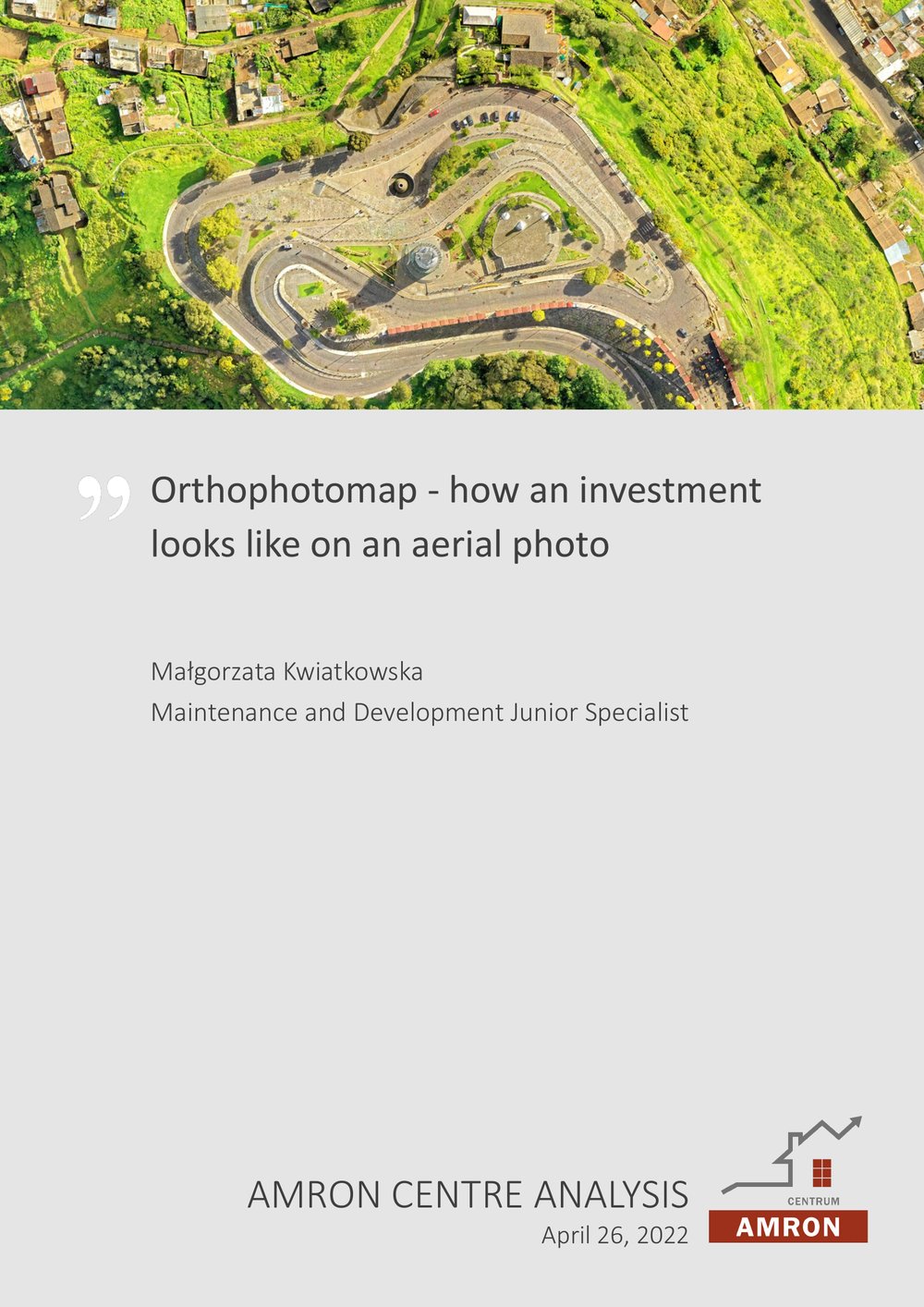
Orthophotomap – how an investment looks like on an aerial photo

Aerial photography is an innovative form of object representation and serves many areas of the economy, including the construction sector. Aerial photographs are commonly used to present investments at various stages. Photos taken by satellites, as well as unmanned aerial vehicles – drones, are used to create an orthophotomap. Orthophotomap created in the process of transformation aerial photos is invaluable in the real estate industry, for construction investments, planning and site inventory.

What is an orthophotomap?

Orthophotomap is a raster image of terrain surface in orthogonal projection (perpendicular to the photographed plane), identified with a classical map, presented in an appropriate mapping. It is created as a result of processing and superimposing hundreds of satellite or aerial images, including images taken by drones. Orthophotos are used in many areas of the economy. The most popular examples of use of such maps are freely available map services, such as Google Earth or Geoportal. In Poland, the orthophotomap database is maintained by the Main Geodesist of Poland, under the Act amending the Geodetic and Cartographic Law.

An example of an orthophotomap – all of Poland and a part of Warsaw.

Source: www.mapy.geoportal.gov.pl

220426_Orthophotomap_-_how_an_investment_looks_like_on_an_aerial_photo_GK_rId4

Why does is matter how a property looks in an aerial photo?

Orthophotomap is widely used by local governments and administration. In several cities in Poland orthophotomap is effectively used for calculating property tax payments. In this case orthophotomap, satellite images are analysed by artificial intelligence algorithms. Algorithms recognize buildings and structures and calculate their supposed area. The results are compared with other data collected by local governments. In result, it is possible to identify new buildings, extensions to existing facilities or business activity. They make it possible to identify changes in the area and height of buildings, as well as the condition of buildings. As a result, it is possible to detect the unauthorized building – illegally constructed, undeclared or erroneously reported buildings, which contributes to higher income for the cities.

The use of orthophotomap and aerial photographs

Digital maps, photos and orthophotomap are used on many stages of a construction project: from presentation and planning to inventory, promotion and sales. Orthophotomap has therefore a wide range of application also in the construction industry. It is used for monitoring and imaging particular stages of construction, road or railroad investments. It is helpful in planning an investment location and its influence on the environment. It can be helpful in creating investment offers. It make it possible to regulate planning fees and rationally plan the project costs. Photos often complement project and investment documentation.

Orthophotomap obtained from aerial photos can be successfully used also for land use planning and municipal management. By comparing images from different periods, it is easy to control and plan tree felling. It is also possible to identify wild dumps, as well as water and ground pollution. Orthophotomap is used when drawing up spatial development conditions studies, land development conditions or local spatial development plans. On the basis of the pictures it is possible to determine the purpose and actual use of the land. The photos may be crucial in classifying a plot of land as construction or agricultural.

Aerial photos allow to assess the state of the natural environment, including planning of various types of investments and their impact on the environment. This is often the case of public purpose investment areas with large impact on the environment and forest management. Such analyses enable to estimate the scope of work and minimize the costs. Orthophotomap as well as aerial photos taken by a drone are used for estimating real estate prices, as they enable to determine the actual state of the property. It is also useful during land and building registration. Aerial photos are used in many sectors of the economy for the inventory of land with large areas, pits and open-pit mines.

Drones in the construction sector

New technologies are gaining popularity in all sectors of the economy, including real estate and construction. We don’t need to carry out complicated analyses to know that real estate sales offers, which include aerial photos, are more attractive to potential buyers and in result properties are being sold faster than those, which do not have such photos in their advertisements. Modern marketing solutions enable a buyer to see the property and the surrounding area from a completely different perspective. The photo may encourage to seek for details of the ad. For a person interested in buying a real estate its surroundings are very important. It is much easier to show them in an aerial photo. Photos or video recorded by a drone complement the sales offer. This increases its attractiveness and shows the advantages of the location.

Aerial photography has evolved in recent years and the use of drones has become quite common. Better and better cameras and unmanned aerial vehicles enable to take more and more accurate pictures. The availability and prices of these devices make them accessible to anyone. With the use of drones, aerial photos and videos are taken and photogrammetric data is collected to prepare orthophotomaps. The use of drones in the construction industry enables the monitoring of ongoing construction work, verification of project implementation, as well as safety control during work at heights.

Summary

The application of new technologies, including drones, to improve the implementation of investments, for administrative purposes and on real estate market is becoming increasingly common. However, it should not be forgotten that even the best technologies require control and supervision of a person with appropriate knowledge, skills and experience. The tool itself is often not enough to achieve the intended results. Using a drone requires obtaining appropriate authorizations. It is important to know the appropriate programs and algorithms. The development of orthophotomap is specialized task. Considering the ubiquity of new technological solutions, it is not surprising that illegal buildings, illegal tree cutting or business activities will be brought to light sooner or later.

Małgorzata Kwiatkowska
Maintenance and Development Junior Specialist
Housing supply demand and prices in Poland during the war in Ukraine

Poland is in a very unfavourable geopolitical position. The events taking place beyond our eastern border have a direct and negative impact on the Polish economy. In mid-November 2021, the migrant crisis on the border with Belarus escalated. Unfortunately, the situation is still tense and attempts to enter Poland illegally are still being recorded. On February 24, 2022, Russia invaded Ukraine. Since then, 2.415 million war refugees have arrived to our country (as of April 1, 2022). The consequences of these tragic events affect the most important branches of the Polish economy, including the real estate market, where changes are usually slower, but are already noticeable.

SUPPLY

The previous year turned out to be record-breaking for the construction sector, as since the 1970s the largest number of apartments and single-family houses were completed, totalling more than 235 thousand. In addition, approx. 212 thousand new building permits were issued in 2021, while more than 871 thousand apartments and single-family houses were under construction at the end of the year. The pandemic or high inflation did not stop the developers. Unfortunately, the beginning of this year is not very optimistic. According to the latest data published by GUS (Polish Central Statistical Office), in March the consumer price index reached 10.9% y/y, which was by 2.4% more than in February. The prices of building materials have been rising even higher and there is no indication that this trend will reverse. From September 2021, monthly rates of price increases have exceeded 20% y/y. In February this year, a 27% increase was recorded. An additional impulse for further prices increases will certainly be the embargo on the import of raw materials from Russia and Belarus. It is not only gas, oil or coal, but also wood, cement, aluminium or steel.

CHART 1. AVERAGE DYNAMICS OF BUILDING MATERIAL PRICES FROM 2019 TO 2022 (YEAR-TO-YEAR CHANGES)

source: PBS Developer Group

Building materials account for the highest share of the overall construction cost of a residential property, but it must be remembered that transport and labour also become more expensive. Another problem is the insufficient number of blue-collar workers on construction sites. Ukrainians made up a significant part of such employees, but due to extensive military mobilization, they have left Poland. It is estimated that since the beginning of the war, about 30% of approximately 73 thousand Ukrainian construction workers left Poland. It is true that there is a huge influx of immigrants, but they are mostly women with children and they will not be able to fill the gap on the labour market. This can cause long delays in investments.

The last major factor that will affect real estate development activity this year is the reduction in bank financing of investments. Rising interest rates and the more restrictive lending criteria are the consequences of double-digit inflation caused, among others, by the war. According to the National Debt Register, the total debt of Polish development companies currently amounts to PLN 193 million. Compared to March 2020, the number of indebted entities in this sector has increased. On the other hand, their total debt has been decreasing for several months and is lower by about PLN 3 million y/y. Mortgage loans are no longer cheap and easily accessible, which can discourage many investors from starting new investments.

In these uncertain times, developers face further difficulties, such as constantly rising prices of building materials, delivery delays, less access to labour and more expensive mortgage loans. How will developers handle this year? During the COVID-19 pandemic, many experts were predicting a crisis in the industry, but it did not happen. This year, we expect problems with planning investment costs and greater delays in the construction of buildings. In January and February, a slight slowdown was visible as developers completed 6.5% fewer residential units than a year ago, according to GUS (Polish Central Statistical Office) data. Residential construction notifications also fell by 5.8%, while building permits were only 0.7% less. This allows us to make a conclusion that 2022 will probably not be a record year in terms of these three indexes.

DEMAND

Among European countries, Poland ranks as one of the last in terms of the number of apartments per one citizen. According to various estimates, in Poland there is a shortage ranging from half a million and three million apartments. This deficit may even deepen due to the settlement of refugees from Ukraine in Poland. Only some of them find temporary shelter in Polish homes or in hostels. Most are looking for a place to live on the commercial market. The best solution for the beginning seems to be renting, but offers of apartments and rooms in large cities disappear very quickly. PKO Bank Polski S.A. published a report stating that the supply of apartments for rent has fallen in some cities by more than 70%. The biggest drops in the number of offers were observed in Wroclaw, Cracow, Gdansk and Lublin. In Warsaw, this decrease amounted to over 50%. This can be a good signal for investors planning to buy premises for rent. Currently, the percentage of such transactions accounts for almost 50% in the largest cities. On the other hand, some foreigners, who decide to stay in Poland permanently, will purchase their own apartments. For years, Ukrainians have been the leaders among foreigners in buying real estate in Poland, and it will probably remain that way. According to analysts at PKO Bank Polski S.A., in the next few years the demand will increase by additional 230 thousand apartments.

The above arguments may support the idea that demand will continue to be high. In opposition, there are further increases in interest rates caused by the highest inflation in 22 years. In September of the previous year, WIBOR rate was close to zero. The decision of the Monetary Policy Council on the first interest rate increase in 9 years was made on October 6, 2021. Currently, the reference rate is 4.50% and further increases are forecasted in the near future to the level of 5-6% or even up to 8% in the pessimistic scenario. Borrowers experience more and more severe debt burdens on their household budgets and already pay instalments often higher by 1/3 than last summer. People, who think about taking out a mortgage loan, may hold back a decision in these uncertain times, hearing about the difficult situation of many Poles. Even if we are prepared to pay off an expensive mortgage loan, we may find out that the bank cannot give it to us, even if it was possible just six months ago. The creditworthiness of Poles has significantly decreased not only due to the decisions of the Monetary Policy Council, but also after the entry into force of the new version of the Recommendation S of the Polish Financial Supervision Authority.

From now on, more restrictive procedures are applied when determining the maximum mortgage loan amount, as it is necessary to take into account a possible change in the interest rate level by as much as 5 percentage points, which means that currently estimates should be made for 8.5%. The creditworthiness of bank customers may have fallen even by half from September 2021. The result is decreased interest in mortgage loans, which is clearly visible in the chart presenting the BIK index. The dynamics of sales and submitted applications has clearly decreased. The latest reading from February shows that the value of applied mortgage loans has decreased by 29.2% y/y. In case of sales, there has also been a downward trend since October.

CHART 2. BIK INDEX OF DEMAND FOR MORTGAGE LOANS (YEAR-TO-YEAR CHANGES)

source: BIK

The towns located near eastern Polish border are also worth mentioning, where the fear of war effectively stops residents and investors from purchasing apartments and single-family houses. Real estate agents operating in these areas indicate the problems of the local markets as panic among clients and much fewer transactions.

PRICES

How the probable reduction in supply and demand pressure from refugees may affect housing prices? The most realistic scenario for 2022 seems to be a slowdown in growth of transaction prices in the largest cities, among others due to lower availability of mortgage loans. In the coming months, the annual increases may not be as spectacular as in 2021 and may not exceed the level of galloping inflation. The situation on the real estate market will be created by new factors and the war is cooling down the optimistic forecasts. When it comes to renting properties, the pandemic declines have been followed by a revival, because since February increases have been higher than in the whole last year. Analysts at PKO Bank Polski S.A. showed that since the outbreak of the war, offer rent rates in newly constructed buildings have risen by 33% in Wroclaw, 26% in Krakow and 15% in Warsaw. Despite the fact that the real estate market is cyclical and some events can be predicted, it should be remembered that forecasts are uncertain and one should be cautious when estimating the risk of investment.

Ewelina Staruch
Real Estate Market Analyst

Fund for Mortgage Borrowers Support

On 8 March, 2022 the Monetary Policy Council raised the reference interest rate once again. This time the rate was increased by 0.75 basis points and reached the level of 3.5%, which is the highest value since February 2013. The Monetary Policy Council has been systematically raising the main interest rate every month since October 2021, which results in another increase in instalments of variable interest rate loans. These types of loans dominate in Poland. According to the data of the European Mortgage Federation, in December 2020 variable interest rate mortgage loans in Poland constituted 100% of all granted mortgage loans, which distinguished Poland from other countries in the region. Currently, this trend has changed. According to the recommendation of the Polish Financial Supervision Authority (PFSA), from July 2021, loans with a fixed interest rate should be offered by all commercial bank. Despite this recommendation, credits with fixed interest rate have not revolutionised the Polish mortgage market yet.

CHART 1. THE NBP REFERENCE RATE LEVEL

source: self-study based on the data of the National Bank of Poland

While previous interest rates rises were aimed at stopping inflation, the latest increase is additionally related to the necessity to protect Polish currency in connection with the Russian invasion of Ukraine and its economic consequences. The Monetary Policy Council has announced that this growth was not the last reference rates rise, what could become a problem for households that contracted a loan at historically low interest rates and misjudged the risk of significant increase in instalments, or for households that took out loans despite high level of a debt service to income (DStI) ratio. DStI is the ratio of the customer’s total annual commitments (credit and non-credit financial obligations) to the total annual income of the customer. In accordance with the Recommendation S of the PFSA: In the process of assessing the creditworthiness of retail clients, the bank should draw special attention to situations when the DStI ratio is higher than 40% for clients with income not exceeding the average level of remuneration in their place of residence, and 50% for other clients. Moreover, Recommendation S indicates: The bank should identify customers, whose loans are characterized by a high DStI ratio (exceeding 30% for customers with income not exceeding the average level of remuneration in the economy or place of residence or 40% for other customers) and low income buffer and analyse their situation and resilience to increase in interest rates at least once a year, especially in the environment of low interest rates. According to the data published by the PFSA, at the end of 2020, the median of the DStI distribution was within the range from 20% to 30%.

CHART 2. DISTRIBUTION OF PLN AND FOREIGN CURRENCY HOUSING LOANS IN TERMS OF DSTI LEVEL BY GROSS CARRYING AMOUNT AT THE END OF 2020 (PLN BILLION)

220330_Fund_for_Mortgage_Borrowers_Support_JK_rId9

source: Information on the situation of the banking sector in 2020, the Polish Financial Supervision Authority, Department of Commercial and Specialist Banking, Banking Sector Analysis Team, Warsaw, July 2021.

The above-mentioned increases in interest rates, as well as rising inflation, contribute to the deterioration of the financial situation of Poles. The consumer inflation forecast by the National Bank of Poland in 2022 will amount to 10.8% and its peak at the level of 12.1% is foreseen to occur in the third quarter of this year, while according to the projection from November 2021, the consumer inflation forecast for 2022 was expected to be equal to 5.8%. As a result of all factors described above plus lower remunerations resulting from taxation changes related to the Polish Deal and the constant increases in gas and fossil fuel prices, some households’ budgets will run out.

In these circumstances, the Fund for Mortgage Borrowers Support established by the Act of October 9, 2015 on supporting mortgage borrowers who took out a housing loan and are in a difficult financial situation (Journal of Laws of 2021, item 1516, 1535), may turn out to be helpful for some borrowers.

The purpose of the Fund is: (…) to provide repayable support for credit recipients who found themselves in difficult financial situation and who are obliged to repay mortgage instalments that are significantly burdening the household budget . In addition the Fund’s goal is: to ensure a repayable loan to cover the remaining part of the debt after the sale of the real estate3. As part of the offered support, natural persons can obtain a maximum of PLN 72 000 in the form of an interest-free loan, which is a very advantageous option due to the current inflation. Beneficiaries will be eligible for assistance for a period of maximum 36 months. The amount of the monthly support is determined individually depending on the principal and interest instalment, however, the monthly support cannot exceed PLN 2 000. If the beneficiary decides to sell the credited real estate and the funds obtained from the transaction do not cover the remaining loan amount, the borrower may apply for a loan in the amount not exceeding PLN 72 000 to repay the debt. Monthly instalment support and the loan is provided through Bank Gospodarstwa Krajowego (BGK). The Fund’s resources are endowed from lenders’ contributions, in proportion to the size of portfolio of mortgage loans with delay in repayments of principal or interest exceeding 90 days, as well as from support returns and incomes from investing the Fund’s free resources. To obtain support, an appropriate application must be submitted to the bank where the loan is repaid. Importantly, borrowers with loans in both Polish and foreign currencies can count on support.

Pursuant to the Act, support is granted if at least one of the conditions is fulfilled:

  • at least one of the borrowers will lose the job and has a status of an unemployed person,
  • monthly loan servicing costs exceed 50% of the household’s income,
  • the income after deducting the instalment does not exceed:
  • o in case of single person households – double of the adjusted amount referred to in Art. 8 sec. 1 point 1 of the Act of March 12, 2004 on Social Assistance (i.e. Journal of Laws of 2021, items 2268, 2270, of 2022, items 1, 66), currently PLN 1 552,
  • o in case of multi-person households – double of the adjusted amount referred to in Art. 8 sec. 1 point 2 of the Act of March 12, 2004 on Social Assistance (i.e. Journal of Laws of 2021, items 2268, 2270, of 2022, items 1, 66), currently PLN 1 200 per person.

The criteria are strict, even after taking account of significant growth of interest rates. In case the premise, under which the borrower obtained the support, ceases to exist before the 36th month, the borrower is obliged to promptly inform the bank about it. On this basis, the bank suspends the payment of support. In addition, the period of transfer of funds will be shortened, if the object of credit is sold, the housing loan agreement is terminated, against the financed property acts of execution are taken or the loan is repaid.

The legislature has provided exclusion criteria for obtaining assistance:

  • the borrower lost his employment on the initiative or through the action of the borrower himself,
  • one of the borrowers has already received this type of support (exception: if support is no longer being disbursed and support has been disbursed for no longer than 35 months, the total support may be disbursed for up to 36 months),
  • the mortgage loan agreement has been terminated prior to the application for such assistance was submitted,
  • support is not allowable for the period when at least one borrower is entitled to an unemployment benefit under a contract of credit repayment insurance,
  • during 6 months preceding the application for support, the borrower owned another dwelling: the borrower was an owner or had a cooperative right to a dwelling in a housing cooperative or had a claim for transfer of ownership or cooperative right to a dwelling in a housing cooperative.

The obtained support or loan to pay back the debt are repayable in 144 interest-free, equal monthly instalments. The repayment begins two years after the pay-out of the last instalment of the support or loan. Pursuant to the Article 19 sec. 3 of the Act: if a borrower repays 100 instalments without delay, the remaining part of the support instalments or loan for debt repayment is remitted. Due to this provision, the borrower may save PLN 22 000 having regard to the maximum allowable amount of support or loan.

According to the data provided by BGK: 1 161 support contracts for the total amount of PLN 31.5 million were registered until December 31, 2020. The Fund’s expenses include payments, remissions and commission remunerations. As for December 31, 2020, there were 14 728 support instalments paid out for the amount of PLN 18.9 million and the disbursed support in the amount of PLN 0.3 million was waived. The Fund received repayments of the disbursed support in the amount of PLN 1.4 million.

Considering the current economic conditions in Poland, increasing interest in the offered support in mortgage loan repayments is expected. It is worth mentioning that in case of problems with loan repayments, other options are also available, such as the so-called “repayment-free periods” when credit repayments are suspended, extension of the loan period aimed at reducing instalments, loans consolidation, and even declaration of a consumer bankruptcy. However, in the event of liquidity problems it is a good idea to start with talking with the bank.

Judyta Konopka
Project management specialist

Increases in prices of building materials and their impact on prices of flats and housess

Construction costs of apartments and houses depend on many factors, such as technology, cost of building materials, cost of work, cost of a construction project, building area or standard of an apartment or a house. From year to year, construction costs increase, which is mainly caused by rising prices of building materials, an increase in employment costs and a low supply of investment land, and hence an increase in land prices. Therefore, rising costs incurred by developers have an impact on the prices of apartments and houses. The extremely high rates per square meter of a dwelling are also affected by the demand, which is large and unsuitable to supply, both from investors and consumers, who after the outbreak of the coronavirus pandemic began to pay more attention to housing conditions.

According to the reports of the PSB Handel S.A. Group concerning changes in prices of building materials and home and garden equipment, prices in the period of January to December 2020 compared to the same period of 2019 increased by 1.4% on average. The stabilisation of prices of building materials ended at the beginning of 2021. In January 2021, the average year-to-year prices increase amounted to 1.8%, and in the following months a significant prices growth was observed. The chart below shows the average year-to-year changes in building materials prices in the period from January 2021 to January 2022.

GRAPH 1. AVERAGE CHANGES IN BUILDING MATERIALS PRICES Y/Y

source: own study based on PSB Handel S.A Group reports; no data available for August 2021

In the first half of 2021, prices grew at a moderate pace, to reach incredibly high values in the second half of 2021. In January 2022, the prices of building materials were 28% higher than in January 2021.

In the report of PSB Handel S.A. Group concerning changes in the prices of building materials and home and garden equipment, in January 2022 price increases were recorded in all 20 commodity groups, which are presented in the table below.

TABLE 1. CHANGES IN PRICES OF BUILDING MATERIALS IN JANUARY 2022 (CHANGE Y/Y)

COMMODITY GROUP PRICES CHANGE (Y/Y)
thermal insulation 68%
oriented strand boards 54%
dry building 54%
walls, chimneys 27%
roofs, gutters 27%
house surroundings 22%
waterproofing insulations 21%
installations, heating 20%
interior finishing 18%
garden and hobby 17%
lighting, electrics 16%
ceramic tiles, bathrooms, kitchens 16%
tools 16%
joinery 15%
furnishings, household appliances 14%
construction chemicals 13%
decor 12%
automotive 10%
paints, varnishes 10%
cement, lime 6%

source: own study based on PSB Handel S.A. Group reports

Three commodity groups: thermal insulation, oriented strand boards and dry building stand out from the rest with an extraordinary scale of growth, at the level of 68%, 54% and 54%, respectively. Cement and lime prices increased by 6% in January 2022 compared to January 2021. The mentioned increase was the smallest of all commodity groups. However, due to growing costs of obtaining permits for CO2 emissions, limiting production by Polish companies and increasing import of these materials from countries outside the European Union, where CO2 emission restrictions do not apply, we can expect the increase in prices also in this group.

Confirmation of PSB Handel S.A. Group’s analyses are reports made by the Association of Façade Construction Contractors, which also underline the increase in prices of styrofoam and facade wool, belonging to thermal insulation. According to the analysis, a cubic metre of styrofoam in November 2020 cost PLN 100.00 and a square meter of facade wool with a thickness of 15 cm – PLN 30.80, while in November 2021 these prices were at the level of PLN 220.00 and PLN 58.50 respectively.

In 2021, there was also a very large increase in steel and glass prices, as well as the rising timber selling prices. In the statement of the President of the Central Statistical Office published in October 2021, the average selling price of wood for the first three quarters of 2021 was PLN 212.26 per 1 m3. In the same period in 2020 the price was PLN 196.84 per 1 m3. The increase in wood prices was a result of diminished supply of wood from the State Forests and increased demand from the construction sector, as well as from the large-scale wood-using sectors, such as furniture.

The rapid increase in prices of building materials had many causes. First of all this was due to a COVID-19 pandemic and 2020 economy lockdown, when the economy froze and orders for raw materials and building materials were significantly reduced. After reopening of the economy, the industry customers began buying up significant stock of materials to fulfil new orders. Increases in prices of construction materials were therefore a result of unfreezing the economy, increased demand and difficult imports of raw materials. Raw material troubles are being exacerbated by increases in gas, oil and electricity prices.

Prices of construction materials are rising, making it difficult for construction companies to operate. Increases will ultimately hit the retail clients. Construction companies with long contracts are forced to use their margins to cover the differences between their bids and the prevailing market prices. As a consequence, investments are becoming more expensive and the prices of flats, houses and commercial properties are rising.

Strong demand and low supply, rising land prices, high construction costs and the aforementioned increasingly expensive building materials cause the increases in property prices. According to the data in the statements of the President of the Central Statistical Office, the price of a square metre of usable floor area of a residential building in Q4 2020 was PLN 5 012, and in Q4 2021 – PLN 5 134.

According to the report of the Construction Calculators portal, costs of building a house to developer status in January 2022 were:

  • approximately PLN 342 000 net – a single-storey house of 100 square metres,
  • approximately PLN 410 000 net – a house with an attic of 140 square metres,
  • approximately PLN 470 000 net – a house with a basement and attic of 195 square metres.

In January 2021 these costs were respectively: PLN 300 thousand net (14% increase), PLN 358 thousand net (14.5% increase) and PLN 412 thousand net (14% increase).

The latest AMRON-SARFIN Report highlights that the several increases in NBP interest rates, high and rising inflation and the political situation did not affect the stability of the housing market in Q4 2021 and housing prices in most major Polish cities continued to rise. The highest price increases in Q4 2021 compared to Q3 2021, reaching 3.34% and 3.20% respectively, were observed on the Wroclaw and Warsaw markets. The average transaction price of 1 sqm of a flat in Q4 2021in Warsaw was PLN 11 082. In the corresponding period of 2020, the price was at the level of PLN 10 081, so the annual price increase was 9.93%. This was the lowest increase in average prices among the largest Polish cities. Cracow recorded an increase of 15.85%, Wroclaw – 13.42% and Gdansk – 13.14%.

Supply problems, high logistics and energy prices, and the new economic reality of inflation exceeding 9%, as well as increases in the NBP reference rate are causing difficulties in predicting prices of raw materials, building materials and apartment and house prices in 2022. The consequences of the war in Ukraine are also undefined and will certainly affect not only the raw materials and real estate markets, but all areas of life.

Monika Kubisz
AMRON System Coordinator