Changes in the construction law in 2024

In 2024, a series of new regulations in the field of construction law will come into force, encompassing changes resulting from provisions announced by March 14, 2024. Amendments arise from changes to the regulation on technical conditions to be met by buildings and their location, and the regulation on the detailed scope and form of the construction project. Furthermore, in February of this year, the Ministry of Economic Development and Technology announced work on further updates to legal regulations affecting construction law. The aim of these changes is to improve the quality and safety of buildings. New regulations are aligned with modern ecological standards and current social needs.

From April 1, 2024, new regulations regarding the calculation of the total area as well as covered area took effect. According to the new regulations, the covered area will be reduced by the area of external parts of the building, such as ground-level terraces and those supported by columns, cornices, balconies and loggias. With regard to the calculation of the total area of the building, a change has been introduced mandating the deduction of the area of terraces, balconies and loggias.

Starting from August 1, 2024, the amendment introduces a requirement to include an analysis of technical and material solutions regarding acoustics in the technical project for single-family residential buildings with two premises, single-family terraced buildings or semi-detached buildings and multi-family residential buildings. The acoustic analysis should contain information on the assumed level of external noise affecting the building, as well as the level of noise and sound penetrating into the premises of the building, the level of acoustic insulation of the building’s partitions, especially between premises, and the building materials used to meet the new requirements. New regulations are intended to oblige investors to provide proper sound insulation in residential properties.

At the same time, new regulations on the technical conditions to be met by buildings and their location will also come into force. The amendment increases the distance between buildings with more than 4 floors above the ground. The distance of such a building from the plot boundary must be at least 5 meters, regardless of whether the wall facing the boundary has doors or windows. Meanwhile, a balcony in such a building must be at least 3 meters away from the plot boundary. If the building faces the plot boundary with a wall without windows or doors, the new regulations allow for this distance to be reduced. In such a case, the building may be situated up to 1.5 meters from the plot boundary or directly adjacent to it, provided that the local spatial development plan allows this.

The minimum distance between the walls of a new production or warehouse building with a covered area exceeding 1000 sqm and the walls of an existing single-family or multi-family residential building will change to 30 meters. This rule also applies to a planned single-family or multi-family residential building for which a final building permit has been issued or a building notice has been filed.

Another change aims to increase privacy on balconies. If the balconies of adjacent apartments in a multi-family building are located on the same balcony slab, a full vertical partition must be installed between them. This partition should be at least 2.2 meters high and 2 meters wide (or the width of the balcony if it is smaller).

The amended regulations introduce a requirement to designate rooms with a minimum area of 15 sqm for storing bicycles or baby carriages in multi-family residential buildings. The construction of a separate outbuilding, shelter or gazebo for such purposes will be allowed.

New regulations set the minimum area of a commercial premises at 25 sqm to better meet the needs of customers and owners of service and retail spaces by providing sufficient size. However, there are several exceptions to this rule. It is permissible to designate a commercial premises with a smaller floor area if it is located on the ground floor or first floor of the building and has direct access from the outside. This change does not apply to buildings where the commercial premises will be designated before August 1, 2024, or where a building permit was issued before this date.

An organizational change has also been introduced regarding parking spaces for passenger cars used exclusively by disabled persons. For each investment, the number of parking spaces designated for disabled people, which may be located close to building windows, will constitute a maximum of 6% of the total number of parking spaces (but not less than 1).

According to the new regulations, it is mandatory to provide a playground when constructing a multi-family residential building or a complex of such buildings if the number of apartments exceeds 20. The playground should be located in a sufficiently sunny area: at least 2 hours (from 10 AM to 4PM) for areas outside the city and at least 1 hour for urban areas. At least 30% of the playground area should be biologically active. Additionally, the legislator has introduced the requirement to plan the minimum playground area in relation to the number of apartments in the multi-family residential building or complex of such buildings.

For a better living environment, the new regulations expand the scope of required green areas in each investment. On plots intended for the construction of multi-family residential buildings, at least 25% of the plot area must be arranged as a biologically active area, unless the local spatial development plan specifies a different percentage.

On February 29, 2024, the Minister of Economic Development and Technology presented another draft amendment to the Construction Law Act and certain other acts. According to government representatives, despite numerous changes to the construction law in recent years and the simplification, formalization and digitization of the investment process, there are still regulations that do not correspond to the complexity of investments.

In the latest list of legislative and program work of the Council of Ministers, planned changes include, among other things, clarifying the provisions regarding the notification of the construction and reconstruction of single-family residential buildings with a building covered area of up to 70 sqm. It is envisaged to introduce a provision enabling architectural and construction administration authority to verify whether the notification actually concerns the construction or reconstruction of such a building.

Additionally, the construction of backyard shelters and ad hoc hiding places with a floor area of up to 35 sqm, which are intended to protect residents of single-family houses in the event of, for example, a military attack or extreme weather events, will be regulated.

The proposed regulation expands the catalogue of building objects and construction works exempt from the obligation to obtain a building permit, while requiring notification. Among these are non-drainage tanks for rainwater or meltwater with a capacity of up to 15 cubic metres, small retail kiosks and street sales pavilions with a building covered area of up to 15 sqm, free-standing communication buildings and telecommunications containers, and technical installations along with masts on buildings used to generate electricity from wind energy for own needs or to feed into the grid, with a capacity of 50 kW, i.e. not exceeding the capacity of micro-installations.

To the list of investments exempt from the need to obtain a building permit and not requiring notification, it is planned to add, among others, non-drainage tanks for rainwater or meltwater with a maximum capacity of 5 cubic meters, flagpoles and masts for monitoring cameras up to 7 meters high located on the ground, and the construction of small buildings at sports fields, courts, and tracks (such as changing rooms, small stands, shelters for benches, including reserve benches).

Introduced in 2024 changes to the construction law aim to meet the growing social needs related to housing, as well as to adapt urban spaces to current living standards and improve quality of life. Further prepared regulations are intended to facilitate and accelerate the investment and construction process, as well as reduce the burden on investors and architectural and construction administration authority and building control, which is expected to improve their functioning.

Marta Polkowska
Senior Maintenance and Development Specialist
SARFiN System Data Administrator

Loan for a Start – an exceptional programme

For several months now, there has been public discussion about the government programme called “Loan for a Start”. I intentionally avoided using the adjective “new” because it’s merely a more mathematically complex version of the previous program, “Safe Loan 2%”. Similar to all the previous programmes aimed at financially supporting selected borrowers – starting with the “Family on Its Own” programme from 2007-2013, followed by the “Flat for Youth” programme from 2014-2018, and ending with the “Safe Loan 2%” – the “Loan for a Start” programme also provides state subsidies for purchasing a first housing. Successive governments imitate their predecessors, attempting to create the illusion of solving the housing problem in our country by straightforwardly distributing money to those supposedly most in need. However, I am certain that those who are truly in need are not waiting for zero-interest loans. For instance, with an average loan value of PLN 418 000 in the “Safe Loan 2%” programme, the monthly loan instalment for a 25-year repayment period amounts to nearly PLN 1 400. Instead, they likely need rental housing, where the rent payment doesn’t exceed half of that amount. The “Flat Plus” program, which supports the construction of rental apartments, could have been a response to these needs. Unfortunately, it was tainted by the populist possibility of purchasing rental apartments after 20 years of tenancy. Moreover, the assumption that the government would be the executor of this programme led to its failure.

Therefore, I was pleased to read the statement from the new, though presently former Deputy Minister of Development and Technology, Krzysztof Kukucki (former because he was elected as the mayor of Włocławek in the recent local elections). He asserted that if someone wants to buy an apartment and can afford it, it is ok do so. However, if someone doesn’t want to buy or cannot afford to buy, but still needs a place to live, it is the role of the state and local government to ensure that this need is met. I would only add to the list of rental housing providers the private “apartment owners” and institutional PRS rental companies.

After the formation of the new government, I hoped for an opportunity to develop long-term programmes that would address Poland’s housing problem. As a banking sector, we have been recommending proven solutions that have been positively verified in other countries for many years. We presented these solutions to Minister Waldemar Buda even before last year. However, the PiS government opted for an election-oriented product called “Safe Loan 2%”. It’s hard to view this product any other way. The previous government’s “Safe Loan 2%” programme did not help PiS win the elections, so I am even more surprised that the new government, despite the total criticism of the effects of the “Safe Loan 2%” (especially the dynamic increase in transaction housing prices caused by it, both on the primary and secondary markets), decided to replicate it with some modifications.

Although the Ministry of Development and Technology has initiated a consultation process, it only involved individual meetings with specific groups rather than discussing potential solutions. The purpose was to evaluate the existing programme’s parameters rather than its validity. Could such a programme, which aims to attract additional housing recipients, be disliked by developers? Certainly, it could not. Could it also be unpopular with banks, as it expands the pool of potential borrowers and increases the number of loans that can be granted, especially in the context of persistently high market interest rates? Absolutely not. Even with the complexity of numerous conditions, limits and exceptions that will require tailor-made loan applications, most borrowers will likely turn to commercial loans to finance their desired property. Furthermore, the “Loan for a Start” programme does not restrict the downpayment amount or the maximum loan amount. However, it’s essential to recognize that the absence of these restrictions might encourage moral hazard. Moreover, a logically thinking potential borrower, after observing the situation with Swiss franc loans and credit holidays, will inevitably conclude that this is ultimately a “state-subsidized” loan, and the government will surely address any potential issues. Populism is gaining ground in Poland, as evidenced by the proposal to extend credit holidays even to borrowers with fixed-rate loans (!).

I refrain from evaluating whether this trend is a consequence or a cause of the last eight years of the Law and Justice party’s rule, which is unequivocally classified as a populist party in Europe. However, support for populists in our country is among the highest in Europe. The 2023 election campaign in Poland and the first months of the new coalition government indicate a “contagion” of populist demands from PiS. Therefore, every opportunity should be used to discourage populist solutions that harm the economy and democracy.

Why did I call the “Loan for a Start” programme exceptional? Firstly, out of defiance. Secondly, due to the numerous exceptions from the incredibly rich list of parameters defining eligibility for government subsidies. Regardless of the fact that potential beneficiaries are divided into eight categories, each with a maximum allowable income limit for accessing the loan, a maximum loan amount granted under preferential conditions, and the interest rate for this preferential loan, the program exceptionally allows exceeding the income limit by deducting the corresponding subsidy amount. This deduction varies depending on the borrower’s family size.

As a fundamental requirement, similar to all previous programmes, beneficiaries must not own any property. However, here we encounter another exception. Families with at least three children are exempt from this requirement; they can benefit from preferential loans to purchase a different property. But there’s an additional condition: to retain the loan subsidies, they must sell their current property within two years.

Another exception allows raising the loan limits (the amounts covered by subsidies) if the beneficiary purchases property in a locality with significantly higher prices. Both income limits and maximum amounts for preferential loans are increased by 10% or 20%, depending on the cost of reproducing a square meter of housing.

There is no downpayment limit or limit on the amount we want to allocate for property purchase. Furthermore, if we don’t have a 20% downpayment, BGK (Bank Gospodarstwa Krajowego) can provide a guarantee for up to PLN 100 000 to cover all or part of the downpayment when purchasing a property worth PLN 1 million. Providing this guarantee would involve a one-time fee of 1% of the guarantee amount.

The program also sets a limit on the usable area of the purchased property, but this limit exceptionally does not apply to building a house. Initially, the limit is 50 square meters for singles. Each additional household member increases this limit by 25 square meters. However, here’s another exception: exceeding the limit does not disqualify the beneficiary, but it reduces the subsidy by PLN 50 per one square meter of excess, regardless of the number of family members.

Unlike the “Safe Loan 2%” programme, there is no age limit for beneficiaries in this programme, except for singles. For them, there is an “exceptional” age limit of 35 years.

The interest rate for preferential housing loans will depend on the number of children. The base rate is 1.5%. It will be applied to households with no children. Each child will reduce this preferential interest rate by 0.5 percentage point, down to 0% for large families.

Beneficiaries of this preferential interest rate will enjoy it for a maximum of 10 years, during which budget subsidies aim to reduce the cost of debt servicing. In practice, borrowers will initially agree with the bank on 5 years of preferential repayment. Halfway through the subsidy period, a new agreement will cover the next 5 years. After the subsidies end, borrowers will transition to market-based repayment terms. However, the preferential loan is structured (using decreasing instalment payments) so that after 10 years, borrowers will repay a significantly smaller debt than on the day they took out the loan.

Skutkiem tych rozmaitych limitów i ograniczeń może być rozproszenie grupy potencjalnych beneficjentów. Z kredytu „BK2%” w ponad 57% skorzystały gospodarstwa jednoosobowe, czyli single, co skutkowało tak dynamicznym wzrostem cen kawalerek. „Kredyt na Start” będzie atrakcyjny przede wszystkim dla wielodzietnych rodzin, kupujących mieszkania tam, gdzie są one relatywnie tanie, co przy ewentualnie dodatkowo posiadanych przez nie środkach własnych i sięgnięciu po uzupełniający kredyt komercyjny pozwoli rzeczywiście zrealizować ich marzenia i potrzeby mieszkaniowe. Dużo mniej atrakcyjny będzie dla singli.

The various limits and restrictions may lead to a dispersed group of potential beneficiaries. In the “Safe Loan2%” programme, over 57% of beneficiaries were single-person households, resulting in a significant increase in studio apartment prices. The “Loan for Start” programme will be particularly attractive for large families buying homes in areas where prices are relatively low. With additional personal resources and supplementary commercial loans, these families can truly realize their housing dreams and needs. At the same time, the programme will be less appealing for singles. Notably, the programme now allows couples in informal relationships to apply for a loan.

It’s unfortunate that the authors did not consider additional support for families raising children with disabilities in this pro-family programme. Such families should also receive additional preferences. A small adjustment would go a long way. I would wholeheartedly support such an idea and did not criticize populist solutions.

Another oversight in the programme is the complete omission of environmental protection aspects, such as additional preferences for properties meeting specific thermos-energetic parameters.

This programme replicates most of the flaws of the “Safe Loan 2%” programme. The introduced income limits are merely a fig leaf. Banks that participated in the “Safe Loan2%” programme verified these limits, and the result was that over 80% of “Safe Loan 2%” beneficiaries would also qualify for the loan under the “Loan for a Start” programme.

Since this program is not as attractive as “Safe Loan 2%”, interest in it may be lower. The announcement that it will last at least until 2027 and that a new application round will be launched every quarter should prevent an accumulation of applications, both at the programme’s start and at the end of each quarter. Moreover, by the end of 2023, many potential buyers who met the “Safe Loan 2%” programme requirements, have already submitted applications for preferential loans under the “Safe Loan 2%” programme. It’s worth noting that in the first month of the “Safe Loan 2%” programme’s operation (July 2023), banks received over 18 000 applications. However, the programme’s authors anticipate processing 35 000 applications by the end of 2024.

All of this suggests that the projected impact of the “loan for a Start” programme on the housing market will be significantly milder than that of “Safe Loan 2%”. Nevertheless, regardless of the fate of this programme, I still hope for discussions about systemic solutions that extend beyond the duration of a single government term.

Jacek Furga, Ph.D.
Head of AMRON Centre

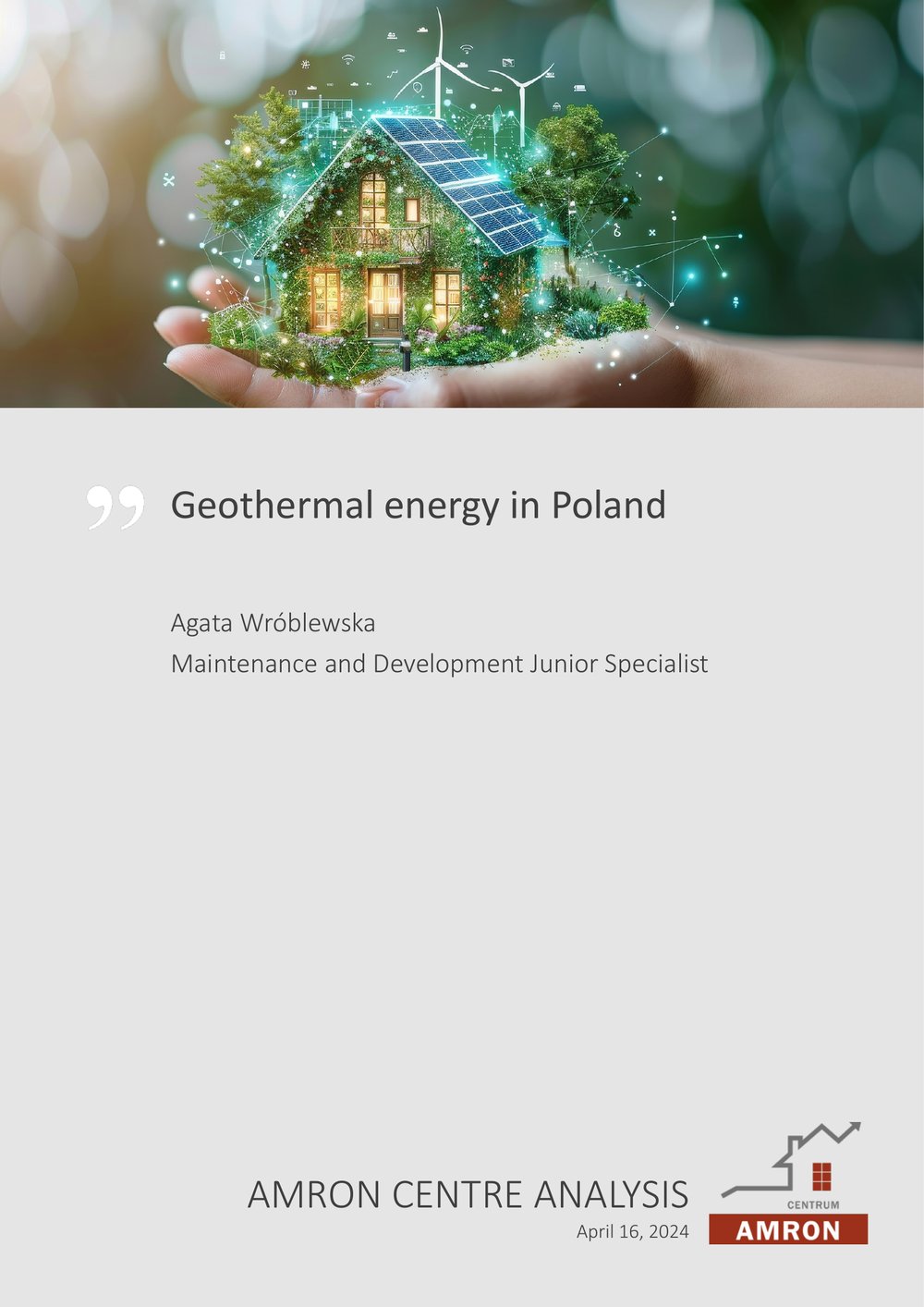
Geothermal energy in Poland

Recent years have highlighted how much society relies on electricity. An additional aspect driving even greater demand for electricity is the electro-dependence of basic household appliances – from heating systems to kitchen appliances or smart systems controlling various components in buildings. All of this makes the lack of power supply impossible for normal functioning. In search of an alternative and following the rapidly growing and popularizing trend of renewable energy sources (RES), interest can be noticed not only in solar energy but also in the possibilities of obtaining thermal energy.

Geothermal energy in Poland has not yet gained as much popularity as other renewable energy sources. However, it is an option increasingly considered both in the prism of single-family housing and societal needs. Geothermal energy is the thermal energy stored in the Earth’s mantle. It is formed due to the decay of radioactive elements, during which a large amount of energy is released. In addition, the mantle and core of the Earth emit residual energy left over from the period of our planet’s formation. Large amounts of heat also come from a series of phase changes and chemical reactions, causing the temperature inside the Earth to reach several thousand Celsius degrees. As depth decreases, temperature decreases as well, representing the geothermal gradient. This is an indicator describing the change in temperature with depth. For Poland, this parameter is approximately 33°C/km (for contrast, this parameter for Iceland is even 100°C/km). The potential lying dormant in Polish geothermal energy is therefore promising, especially since the area with enhanced geothermal utilization overlaps to a significant extent with the location of agglomerations in southern, central, and western Poland.

Geothermal energy can be used to obtain heat or electricity. In Poland, there are natural sedimentary-structural basins filled with geothermal waters at various temperatures ranging from 20 to 80-90°C, and in extreme cases, over 100°C. These are therefore low-temperature deposits, which are ideal for heat extraction. High-temperature deposits, with temperatures exceeding 150°C, can be used for electricity generation. Such deposits have not been recorded in Poland, however a well is being drilled in Szaflary (in Podhale) to a depth above standard (about 7000 m). The temperature at its bottom is expected to exceed 160°C, and if water deposits occur at this depth, it will be possible to utilize thermal energy for electricity production. In November 2023, this well had a depth of 4000 m and the first water-bearing level was drilled at a temperature of 85-87°C. The year 2023 also saw the start of several drilling projects in Poland. Among other things, a research well was drilled in Wołomin near Warsaw, which met the project’s assumptions, and it will be possible to exploit the deposit for the city’s heating needs. Also, work began on drilling in Otwock. The estimated temperature of the deposit should range from 40 to 45°C, allowing for the exploitation of the deposit for the city’s heating needs and the implementation of an investment related to restoring the spa character of the city. Increased interest in extracting heat from geothermal energy largely results from public support programs. The latest program implemented in the years 2020-2025 concerns carrying out geological works and research related to the exploration and recognition of thermal water deposits for their use. The budget for achieving the program’s goal is PLN 480 million.

So far, nine geothermal heating plants operate in Poland: Bańska Niżna, Pyrzyce, Stargard Szczeciński, Mszczonów, Uniejów, Słomniki, Klikuszowa, Czarnków, Toruń. The largest geothermal heating plant in Poland is Geotermia Podhalańska (Bańska Niżna). It is located on the outskirts of the Podhale Basin, one of the most important geothermal areas in Poland. In Zakopane, at a depth of 1000 m, thermal waters’ temperature accounts to approx. 26°C, while at depths below 2000 m in the Bańska Niżna area, the water temperature reaches a maximum of 86°C. The total installed capacity at Geotermia Podhalańska is 80.8 MW, of which 40.7 MW comes from geothermal energy. However, the total share of geothermal energy in Poland is only 0.2% in the prism of all renewable energy sources. The main problem in the development of geothermal energy in Poland is location, source efficiency, and the relatively high costs associated with conducting exploratory drilling and implementation. Moreover, such investments are burdened with the risk of obtaining resources with parameters worse than predicted or not obtaining them at all, which will result in a decrease in the economic efficiency of projects or even the impossibility of their implementation. Obtaining thermal water also does not guarantee success, as it is also possible to deplete resources or worsen their parameters. An example is geothermal energy in Kleszczów, where there has been a lowering of the water level, and as a result, in the last two years, the production of geothermal energy amounted to zero.

An alternative for individual consumers is the use of ground source heat pumps, which operate on a similar principle to systems used by heating plants. In single-family buildings, ground heat exchangers, both vertical and horizontal, can be used. In the case of a horizontal installation, the pipes through which the medium circulates are laid below the frost line, i.e. at a depth of about 1.0-1.5 m below ground level. Choosing this option is burdened by the fact that the area where the pipes are located cannot be later built on or shielded in any way, as the proper functioning of the installation requires the infiltration of rainwater into the ground. Additionally, trees cannot be planted near the installation, as over time they could damage the installation elements. The second option, i.e. the vertical installation, does not require the allocation of an area with limited possibilities of use, but the construction costs are higher than in case of a horizontal installation. The vertical system requires the drilling of wells, usually several, to place the installation elements in them. This is a solution that generates higher construction costs with lower operating costs. It also does not require the allocation of a large area of ​​land, as in case of a horizontal installation.

Undoubtedly, the beneficial aspect of using geothermal energy is zero emissions in obtaining thermal energy and the natural process of replenishing the energy source. Furthermore, the installation is not burdensome for users; operating the heat pump does not require specialized training or the allocation of a separate room for operation or fuel storage, as in the case of thermal energy obtained from burning wood or coal. It is an alternative for obtaining thermal energy independent of external suppliers, as in the case of a gas installation. The amount of electricity required to operate the heat pump is so small that, with the additional use of renewable sources of electricity and energy banks, users can ensure independence for their households in crisis situations.

Agata Wróblewska
Maintenance and Development Junior Specialist

Rain gardens as tools for climate change adaptation

In an age of rapidly changing climate conditions, the most sensible approach is naturalistic design. Modern construction focuses on ecology, functionality, minimalism, climate change adaptation, and responsible building practices. One of modern urban and architectural solutions is blue-green infrastructure (BGI). Greenery in private, residential and public spaces may not only serve an aesthetic purpose, but also may fulfil an ecosystem function. While ornamental value is often a priority in private gardens, it’s crucial to consider the usefulness of greenery even in such projects. However, contemporary form of urban areas is mostly shaped by public spaces and property development investments, both in terms of volume and architectural design, as well as nature aspects. It is highly important to implement good practices, especially in these spaces, as they have the greatest impact on a large scale.

Retention greenery instead of lawns

Establishing a lawn as a biologically active surface is an anti-environmental and anti-economic solution. Much higher quality offers functional greenery, which is increasingly common around office buildings certified under LEED or BREEAM systems. It is essential, though, for retention greenery to become a standard also in residential areas and public spaces. Investors are slowly being persuaded to use greenery as an infrastructure element, especially thanks to the low prices of some retentive plants such as currant and willow and the low maintenance costs of naturalistic rain gardens. Small retention imitates nature in collecting, purifying and evapotranspiration rainwater. Meadow, shrub and forest swamps, which, along with bogs, are key natural resources that store large amounts of water and carbon, are models for retention greenery. In urban spaces, small retention includes reservoirs, retention parks and garden squares, wildflower meadows, bioretention basins, rain gardens, swales, and green roofs. A guarantee of a successful project using green infrastructure is cooperation of the investor with a landscape architect.

Rain gardens

Rain gardens are part of blue-green infrastructure (BGI) solutions. They serve as small-scale water retention tools, beneficial for the environment alongside large and medium-scale retention structures. They are used in public spaces, residential areas, as well as in private properties. They involve planting water-resistant flora on specially prepared permeable and water-absorbent soil, allowing them to absorb water up to 40% better than a regular lawn. Over 50% of such a garden consists of hydrophytic plants, well-adapted to wet environments, resistant to drought and flooding, which additionally purify water. Rain gardens store and utilize rainwater from surrounding impermeable surfaces. There are single rain gardens located in a small field depression or in a container, as well as larger systems of artificial wetlands periodically flooded, built – for instance – in housing estates, parks, squares or along roads. It is useful to know why to use a particular green solution, so as not to use them for trendiness and to prevent greenwashing.

Water resources in Poland, according to the Water Exploitation Index plus, are among the smallest in Europe. Our country loses significant amounts of freshwater that flows into rivers and end up in the sea. Further losses are caused by rapid climate change, exacerbating the problem of drought and storms. Rain gardens aim to retain as much water in the landscape as possible and release a larger portion directly into the atmosphere instead of into stormwater drains. The best source for such gardens is water from roofs, pavements, promenades, drives, and car parks. Among the main benefits of rain gardens are:

  • protection against drought, flooding, and floods,
  • improvement of microclimate and biodiversity increase,
  • increase of humidity and air quality,
  • soil regeneration,
  • natural filtration of rainwater,
  • facilitation of storm water drainage,
  • lower maintenance requirements and thereby financial benefits.

The establishment of rain gardens brings positive ecological, economic and health changes, but also visual and acoustic ones by attracting birds that enjoy being in the presence of water and naturalistic greenery. Other positive effects include the prevention of unaesthetic and troublesome puddles.

Home rain garden

To improve water conditions in immediate surroundings, a rain garden can be created by anyone, even in their own backyard, either in the ground (preferably subsoil) or in a container, or even on a balcony. Furthermore, a rain garden can be infiltrative or isolated. The cost of a small home rain garden ranges from two to five thousand zloty. The area of the rain garden should be about 3% of the drainage area. Establishing a home rain garden can be commissioned to a landscape architect, but it can also be done by oneself. Substantive information on plants dedicated to such gardens is worth looking for on websites of building and gardening stores.

A CROSS SECTION THROUGH AN ISOLATED RAIN GARDEN IN A CONTAINER

231207_Rain_gardens_as_tools_for_climate_change_adaptation_WP_rId5

source: EMSWCD, https://emswcd.org/in-your-yard/rain-gardens/stormwater-planters/

Soil and plants in rain gardens

The rain garden’s soil consists of coarse sand and porous rocks, such as limestone, gravel, stone, or volcanic rocks. Rain gardens in containers are particularly suitable for highly urbanized areas lacking green spaces. Hardened surfaces are not an obstacle to improving water conditions. Recommended hydrophytic plants for rain gardens include, among others, iris, marsh gladiolus, loosestrife, valerian, great manna grass, reed canary grass, rush, dwarf bulrush and common reed. A beautiful effect can be achieved with meadowsweet and a combination of irises with loosestrifes. Plants with increased water requirements, such as hydrangeas, ferns, and most other shade plants, are especially good on more naturally permeable soils. On sandy soils, flower meadows work best. Shrubs and trees can also serve as retention greenery. Recommended shrubs include viburnum and currant, while ideal trees for rain gardens are white willow, brittle willow, black and white poplar, black and grey alder, pink oak, and red maple. It is crucial for planted trees to be young and unaccustomed to other environmental conditions.

Local government actions for the idea of sponge city

In recent years, a positive change in green management by many local governments has been observed. Naturalistic greenery and small retention facilities are increasingly being introduced in public spaces, and such solutions used to be difficult to implement due to insufficient public knowledge of the unquantifiable benefits of their use, both ecological, aesthetic, and financial. The number of rain gardens is rapidly growing in Pomerania – an area particularly vulnerable to floods due to its specific geographical location and intensification of weather anomalies. Gdansk is the first city in Poland where territorial rain gardens were created. In 2016, the first citizen panel on flood risks was held in Gdansk. The local community have opted for natural solutions, and the municipal board has appointed a small retention specialist at the city’s municipal water company Gdanskie Wody. By 2020, several municipal rain gardens were established in the city, preventing many local flooding incidents. Throughout Tricity, positive competition between cities on water retention has begun, including through programs to subsidize small retention facilities. In Tricity a positive competition between cities on water retention has begun thanks to programs to subsidize small retention facilities, among others. In the following years, more and more cities have convinced to the idea of a sponge city. There were established a lot of green-blue infrastructure investment projects, conferences (e.g., “Green retention – how to avoid flooding and droughts in cities,” organized by incl. Gdanskie Wody), and competitions for local communities.

Weronika Przypaśniak
Junior Specialist in Research and Market Service

Circular economy in real estate and construction industry: maximum value and minimum waste

The world’s population growth, depletion of natural resources and air pollution require societies to rethink and change current consumption habits. Climate change is speeding toward catastrophe and the existence of linear economy, which is based on low-cost production, assuming unlimited access to large quantities of materials and unlimited waste production capacity, will not be possible any longer. The construction industry not only is responsible for significant quantities of global greenhouse gas emissions, but also produces the large amount of waste – from the beginning of building construction to later everyday maintenance. Moreover, only a tiny percentage of construction waste can be recycled back into circulation. The transition from a linear to circular economy may be a solution of these problems, because the circular economy focuses on waste prevention and environmental protection, together with a positive effect on economic growth. But this will not be possible without making any changes especially in real estate and construction industry.

From linear to circular economy

The linear economy is a model of production and consumption, which is based on the extraction of resources to make products that are used and finally end up as waste and are thrown away. This model relies on achieving economic benefits by cheap materials and energy (assuming unlimited access to them). Therefore, the linear economy does not solve social and environmental problems. What is important, most economies in the world (including the construction industry) currently follow a linear economy model.

The circular economy, unlike the linear one, relies on using existing materials and products as long as possible. Furthermore, waste is eliminated because all materials and products are prepared for reuse and recycling, so they are kept in circulation at their highest value all the time. The circular economy model follows the 3Rs principle:

  • reduce,
  • reuse,
  • recycle.

First and foremost, the most important thing is to reduce the amount of waste using less resources to manufacture things. In the second place, we should use products as many times as possible for the same or for different purpose. Finally, if the product no longer serves its purpose, recycling comes into play. However, some types of recycling processes can be energy intensive and that is why recycle is in the third place.

There are various benefits from circular economy, such as protecting the environment, boosting economic growth, creating jobs and reducing raw material dependence on other countries.

In the future, the circular economy could replace the linear one. Both the European Union and Poland proposed various growth strategies and policy initiatives for this purpose (e.g. The European Green Deal, which aims to make the European Union’s climate neutral by 2050).

Changes and new developments

Construction accounts for more than 35% of total EU waste. It is also a big user of natural resources, which may be limited soon. Lack of housing and land scarcity is another key problem, that is particularly noticeable in the largest European cities such as Paris or London. In the future, Warsaw may be confronted with it too.

Because of these challenges, the transition from a linear to circular economy won’t be possible without considering and making some changes in the construction industry, with regard not only to the building design or building materials used in construction, but also conversion and adaptation of existing buildings. One of the 10 main goals included in the European Green Deal is building renovation, that can reduce greenhouse gas emissions and improve the property usability (what is important in land scarcity case). Modernization of existing buildings may Increase the value of the property in a long term and protect green areas in cities from building up.

Nowadays if we want to change the function of a building, it is still cheaper to demolish this building and build a new one, than do a full renovation. The implementation of circular economy will implement changes, because according to the 3Rs principle – waste production, greenhouse gas emissions and use of natural resources must be reduced.

In circular economy, durability and long lifespan of buildings are crucial. The building should be designed in a way that makes it able to adjust easily to another use without major renovation or rehabilitation work and thus, reduce materials and costs. For example, an office building can shift to housing or commercial and back again. Better anticipating the different ways in which a building can be used will be an important aspect of building design in the future.

Another important issue is construction waste prevention. In circular economy, even after demolition all materials and products should be reused (and kept in circulation). However, it means we still have to find more sustainable solutions and new materials, such as hempcrete. Another issue is creating building systems that can be easily disassembled and reassembled. Circle House, located in Lisbjerg near Aarhus in Denmark, is a good example of it. The goal of this project is that 90% of used materials can be dismantled and reused in other buildings while keeping their aesthetic and economic values intact.

Summary

Transformation towards a circular economy in real estate and construction industry will be a challenge for all, especially in Poland. Nevertheless, it will provide an opportunity to create new jobs and businesses engaged in building renovation or recycling construction materials. The clue is to raise people’s knowledge and awareness of climate changes, circularity in construction and finally, make some changes (including e.g. technology) to create the best conditions for this transformation.

Karolina Sawczuk
Junior Specialist in Research and Market Service

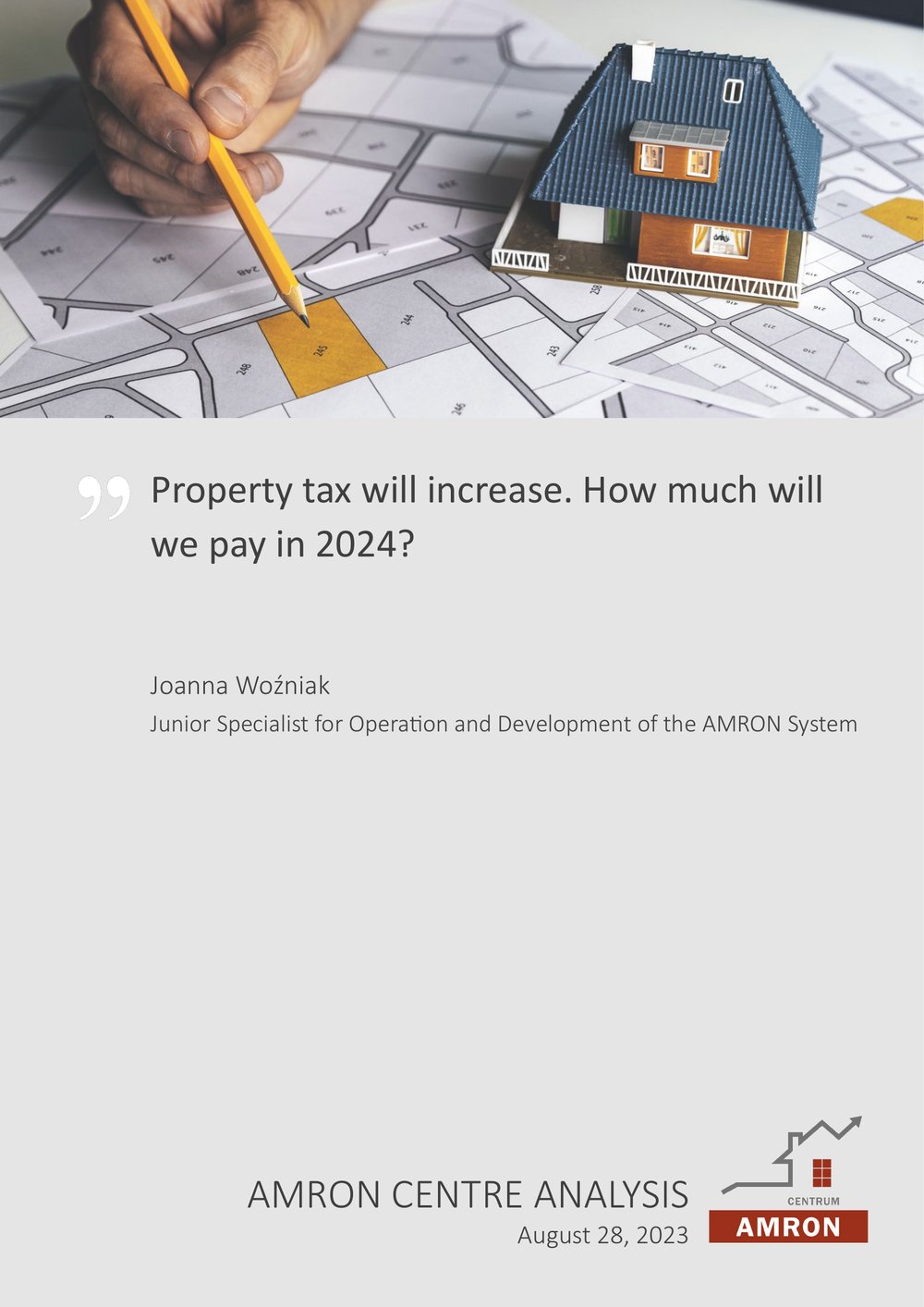
Property tax will increase. How much will we pay in 2024?

Once again, the topic of property tax is returning. Poles are slowly getting used to double-digit increases. This year we had to pay almost 12% more than last year, and there is no sign of improvement in the next one. On 14 July 2023 the President of the Statistics Poland has issued a statement on the consumer price index for the first six months of this year vs. the corresponding period of the last year, which showed a jump of 15% upwards. We can also expect an increase in the levy by this much, as the Minister of Finance is guided by the level of inflation when setting tax thresholds.

Property tax rates are set by municipalities

Property taxes belong to the group of so-called local taxes. It is entirely assigned to the budgets of municipalities. The Minister of Finance only determines the highest applicable rates, while the final decisions on their amount are taken – usually in the fourth quarter of the year – by councillors in the form of a resolution. Local governments are therefore not obliged to adapt the conversion rates announced by the Minister in their own region, but may vary them for particular types of property, provided that the rates will not be higher than determined in the act on local taxes and payments.

Local governments are reluctant to budge from the upper limits adopted by the supreme administrative authorities. Last time, approx. 90% of local authorities adopted tax rates only slightly lower than the maximum rate, so there is no indication that it will be different now. This is because property taxes are an important source of own revenue for local government units, which supports their economic development.

Maximum property tax rate thresholds in 2024

According to the Minister of Finance notice of 21 July 2023, the new tax rate thresholds on real estate will increase as follows:

on land:

  • connected with business activities, regardless of the qualification in the land and buildings register – PLN 1.16 PLN 1.34 per sqm;
  • under surface standing or running waters of lakes and artificial reservoirs – PLN 5.79 PLN 6.66 per 1 2ha of surface area;
  • other, including those used for conducting paid statutory public benefit activity by public benefit organisations – PLN 0.61 PLN 0.71 per sqm;
  • undeveloped land included in the revitalisation area referred to in the Act of 9 October 2015 on revitalisation and located in areas, for which the local spatial development plan provides residential, service or mixed use development, including exclusively of mixed use including only these types of development, if a period of 4 years has elapsed from the date of entry into force of this plan with respect to these lands, and during this period construction has not been completed in accordance with pursuant to the provisions of the Construction Law – PLN 3.81 PLN 4.39 per sqm;

on buildings or parts thereof:

  • residential buildings – PLN 1.00 PLN 1.15 per sqm of usable area;
  • those connected with business activities and from residential buildings or parts thereof occupied for business activities – PLN 28.78 PLN 33.10 per sqm of usable area;
  • occupied for conducting business activity in the scope of trading in qualified seed – PLN 13.47 PLN 15.50 per sqm of usable area;
  • those related to the health care services within the meaning of the provisions on medical activity, occupied by entities providing such services – PLN 5.87 PLN 6.76 per sqm of usable area;
  • other, including those used for conducting paid statutory public benefit activity by public benefit organisations – PLN 9.71 PLN 11.17 per sqm of usable area;
  • on structures – remains at 2% of their value determined pursuant to Article 4(1)(3) and (3)-(7).

CHART 1. MAXIMUM PROPERTY TAX RATE PER 1 SQM. OF 1 FLOOR AREA OF A FLAT OR HOUSE FROM 2000 TO 2024

230828_Property_tax_JW_rId8

source: Own elaboration based on data of the Ministry of Finance

The graph above shows the trend in property tax rates from 2000 to 2024 in relation to residential buildings. It is easy to see that the fees have been steadily increasing all the time. The exceptions were 2016 and 2017, when they remained at the same level of PLN 0.75/sqm. In 2024, house and flat owners will pay PLN 1.15 per square metre of usable area, which is historically 15 per cent more compared to the previous year.

By when must the fee be paid?

The taxpayer does not have to calculate the due tax amount on his own. We will soon receive information with the amounts of those new fees for 2024. Individuals have their payment distributed over four instalments, which they should pay by the 15th day of each last month occurring in the quarter, i.e. 15 March, 15 May, 15 September and 15 November. In a situation when the total tax amount does not exceed PLN 100, the tax is payable once within the time limit for payment of the first instalment. Other payers also have the right to pay the total tax for the entire year. Such a solution is very popular among persons, whose liabilities are not high.

Business entities are obliged to make monthly payments in instalments proportionate to the duration of their tax liability – the first instalment by the 31st of January, the others by the 15th of each month.

In case of legal persons conducting business activity as sole proprietors, the deadlines and payment methods are the same as for individuals.

Summary

Despite upcoming record-breaking increase in property tax, the due amount still remains symbolic. The owner of a single-family residential building with a usable area of 200 sqm, located on a plot of 800 sqm will pay only PLN 110 more. On the other hand, the fact that this is one of many increases weighing on our wallets is not optimistic. The cost of maintaining immovable property is increasing at a rate well ahead of inflation and households are increasingly burdened with the high prices. In addition, they will have to accept new local charges.

Joanna Woźniak
Maintenance and Development Junior Specialist

2% Safe Loan and its impact on real estate prices in Poland

At the end of May 2023, Polish parliament completed work on the Act on state aid in saving for housing purposes. The act is in force since July 1, 2023 and introduces a new programme called First Apartment. One of the basics of this programme is a new form of credit – 2% Safe Loan, which is available in a few banks since July 3, 2023. According to BGK (pol. Bank Gospodarstwa Krajowego – the managing entity) these are currently: PKO Bank Polski S.A., Bank Pekao S.A., Alior Bank S.A., VeloBank S.A., SGB Bank S.A., Bank BPS S.A. and cooperative banks of the BPS Association, Bank Spółdzielczy Rzemiosła in Cracow and Bank Spółdzielczy in Brodnica.

2% Safe Loan – assumptions

As part of the obtained 2% Safe Loan, the borrower is guaranteed a loan with a fixed base rate of 2%. According to the assumptions, the programme provides subsidies to the loan for the first 10 years, so that the base rate in this period won’t be higher than the aforementioned 2%. In other words, the subsidy will be the difference between the fixed rate determined on the basis of the average interest rate on loans with a fixed rate at lending banks, and the interest rate on the loan at the rate of 2%. Crediting banks add their margin to the base rate.

To be able to apply for a 2% Safe Loan, borrowers must meet several conditions:

  • on the date of submitting the application, the borrower must be younger than 45 years old (in case of married couples it concerns at least one of spouses),
  • the programme is addressed to people who buy or build their first apartment or house (applies to both spouses in the case of married couples) – the programme cannot be used by people who already own any housing real estate,
  • real estate can be purchased both on the secondary and primary market, and a loan can also be granted for the purchase of a plot and construction of a house (on this plot),
  • there are no price limits per square meter of purchased real estate,
  • the maximum loan amount is PLN 500 000 for a single person and PLN 600 000 for married couples or parents with a child, to use the above maximum loan amounts, borrowers must have a net income of:
    by PLN 7 – 8 thousand per month – for a single person,
    by PLN 9 – 10 thousand per month – for married couples or parents with a child,
  • own contribution may not exceed PLN 200 000.

Becoming a borrower of the 2% Safe Loan, borrowers should remember about a few additional aspects so as not to lose the right to subsidies:

  • the property must be inhabited within 2 years of purchase,
  • the property cannot be sold earlier than after 10 years,
  • during the period of receiving subsidies, it is not possible to change the way the property is used or to rent it,
  • it is not possible to overpay the loan or fully repay it before the end of 3 years.

It is worth noting that in the offer of banks: PKO BP S.A., Pekao S.A. and Alior Bank S.A. borrowers may not have any own contribution (banks participate in the Loan programme without own contribution).

Therefore, having the maximum possible amounts described in the assumptions, potential borrowers can look for apartments in the price ranges of up to PLN 700 000 – 800 000. This seems to be an amount that gives a wide range of real estate choices on the market, even in the largest agglomerations. However, after launching the programme, do we really have the same pool of available apartments in the indicated price range to choose from?

Has the launch of the 2% Safe Loan affected real estate prices?

During the works on formulating the 2% Safe Loan assumptions, many experts and real estate market analysts were sceptical about this programme. It was a common opinion that the introduction of such a form of credit would increase the offer prices of real estate. Demand for housing will increase due to better availability of housing loans for a wide range of people, while the supply of real estate will not increase, which will be the main reason for the prices increase on the market. The closer the launch of the programme, the more visible was its impact on prices. It is shown by analyses of changes in offer prices available on the Internet. Since the announcement of the programme in mid-December 2022, real estate prices have been increasing month by month. The chart below shows how the average offer prices of apartments in Warsaw change nowadays.

PICTURE 1. CHANGES IN THE AVERAGE OFFER PRICES OF FLATS IN WARSAW

source: https://zametr.pl/ceny-mieszkan/warszawa (access: 25.07.2023)

In Warsaw, the increase in prices has been noticeable since December 2022. Offer prices began to increase even faster from March 2023 and currently, both on the secondary and primary markets, they average around PLN 16 000/sqm. In mid-December, the average unit price was around PLN 14 500/sqm. This is an increase of as much as 10% in just 6 months. The phenomenon is also confirmed by the analysis of the number of offers with a price change.

PICTURE 2. NUMBER OF OFFERS WITH PRICE CHANGES ON THE WARSAW REAL ESTATE MARKET

source: https://zametr.pl/ceny-mieszkan/warszawa (access: 25.07.2023)

Since December 2022, there have been less and less decreases in offer prices on advertising portals, with a simultaneous increase in the number of more expensive offers. Until recently, we could notice a significant advantage of advertisements for cheaper flats. Last year, from month to month, there were fewer and fewer offers with increasing prices. Currently, there is a much smaller number of offers with price decreases (only 520 in July), and slightly more offers with price increases than in recent months (481 in July). Both values are currently at a similar level. Such situation wasn’t experienced even once since the end of 2021. Is the situation similar on other large markets in Poland? An analysis of the situation on the housing market in Cracow and Gdansk is presented below.

PICTURE 3. CHANGES IN THE AVERAGE OFFER PRICES OF FLATS IN CRACOW

source: https://zametr.pl/ceny-mieszkan/krak%C3%B3w (access: 25.07.2023)

PICTURE 4. NUMBER OF OFFERS WITH PRICE CHANGES ON THE CRACOW REAL ESTATE MARKET

source: https://zametr.pl/ceny-mieszkan/krak%C3%B3w (access: 25.07.2023)

The two charts above show the situation on the housing market in Cracow. The impact of the announcement of 2% Safe Loan in December 2022 is reflected in both changes in average apartment prices and the number of offers with a price change. Half a year ago, the average price of an apartment in Cracow, both on the primary and secondary markets, was PLN 12 500/ sqm. Currently (July 2023), these prices have increased to PLN 14 000/ sqm on the primary market and PLN 14 500/ sqm on the secondary market. Since March 2023, the number of adverts with price increases on advertising portals exceeds the number of adverts with decreases in apartment prices. Much more often in recent months, apartments have become more expensive than cheaper.

PICTURE 5. CHANGES IN THE AVERAGE OFFER PRICES OF FLATS IN GDANSK

source: https://zametr.pl/ceny-mieszkan/gda%C5%84sk (access: 25.07.2023)

PICTURE 6. NUMBER OF OFFERS WITH PRICE CHANGES ON THE GDANSK REAL ESTATE MARKET

source: https://zametr.pl/ceny-mieszkan/gda%C5%84sk (access: 25.07.2023)

On the real estate market in Gdansk, similar tendencies as in Warsaw and Kraków can be observed, although slightly less dynamic. The average offer price of flats between December 2022 and July 2023 increased by 8% on the primary market and 5% on the secondary market. As in the two largest Polish cities, the number of offers with decreasing real estate prices is also declining in Gdansk.

The quoted data directly show that the 2% Safe Loan, the goal of which is to support the way to owning an own apartment, has significantly changed the real estate market in a way that limits the pool of apartments available on the market. In the last 6 months, prices of flats increased much faster than before the announcement of the new loan programme. When browsing real estate offers on advertising portals, it can also be noticed that the percentage of offers in the price range of PLN 700 000 – 800 000 (the maximum possible value of funds at the disposal of the borrowers of 2% Safe Loan) has increased significantly. Therefore, we can see how the market is adjusting to the new credit conditions.

Summary

2% Safe Loan is the next programme, which proves that this type of government action, theoretically supporting the creditworthiness of Poles, primarily causes an increase in demand for housing. Sellers take advantage of this phenomenon by increasing the offer prices of flats. Only the programme’s beneficiaries, i.e. borrowers of the 2% Safe Loan, will benefit from it, while for the remaining, overwhelming group of buyers (those who do not meet the conditions for obtaining such a loan), the possibility of buying their own apartment again becomes more distant.

Barbara Mariańska
Maintenance and Development Specialist

The Energy Performance of Buildings Directive – about the upcoming wave of building renovation in Poland

So far, the increasingly stringent requirements for the energy efficiency of buildings have only applied to newly built properties, but the newest EU law will also affect existing buildings. The main objectives of the revision of the Energy Performance of Buildings Directive (EPBD), known as ‘Buildings Directive’ are to substantially reduce greenhouse gas emissions and energy consumption in the EU building sector by renovation of all existing buildings (both residential and public). The draft amendment to EPBD is currently in trilogue negotiations (between the EU Parliament, the EU Council and the European Commission), the publication of the final shape of this directive is expected in the first half of 2024, and its entry into force will take place in 2026.

According to EPBD, in the near future every building in Poland will have its own energy performance class, similarly as in case of household appliances and electronics. The energy class of building will be determined by how much energy the building consumes during the year (for heating, ventilation, hot water preparation, cooling and lighting) and how much it costs. The EPBD introduces energy classes of residential buildings from the best A+ to the worst G, which will correspond to the 15% worst-performing buildings in the national building stock (the so-called ‘energy vampires’). The Ministry of Economic Development and Technology plans to introduce such a building division system already in 2024.

PICTURE 1. ENERGY PERFORMANCE CLASSES OF BUILDINGS PROPOSED BY THE POLISH NATIONAL ENERGY CONSERVATION AGENCY FOR SINGLE-FAMILY AND MULTI-FAMILY BUILDINGS (BY EP INDICATOR IN kWh/SQM YEARLY)

230724_EPBD_Directive_AP_rId8

source: Summary of the annual conference of the Renovation Wave 2023 on energy classes and one-stop-shops (https://falarenowacji.pl/)

The introduction of the energy classification of buildings will provide a number of benefits for houses and dwellings owners. First of all, it will allow to know the actual energy condition of buildings and plan renovations that will translate into a better quality of life, energy savings and lower property maintenance costs. In accordance with the revision of the EPBD, the energy performance class of the building will be provided in each advertisement for sale or rent, thanks to which the potential buyer or tenant will be aware of the monthly energy bills and the costs of possible renovation in the future. The cost of heating a building with an energy class A may be even 6 times lower in comparison to a building with an energy class F or G, so knowing the energy class will have a significant impact on the transaction prices of properties or rents and on exposure time of properties on the market. In addition, in case of the highest energy classes, it will be possible to obtain a lower mortgage interest rate. The system of energy performance classes is already successfully operating in most European countries, e.g. in Belgium, the Netherlands, Ireland, France, Germany, Norway, Denmark, Italy and the UK.

However, the aim of the amendment to EPBD is not to introduce the energy performance classes of buildings, but to systematically improve them until the elimination of buildings with the worst energy efficiency. Therefore, the EPBD requires non-residential and public buildings to achieve at least energy efficiency class E by 2027 and class D by 2030. Residential buildings would have to achieve the same classes by 2030 and 2033 respectively. Next years, buildings should achieve higher and higher classes and by 2050 the entire national building stock should be transformed into zero-emission and climate-neutral, that in practice means the need to renovate almost all existing buildings in this perspective (except for those that already meet the highest standards).

EU countries may decide to exclude certain groups of buildings from the new rules, e.g. monuments and other protected buildings, buildings with a floor area less than 50 sqm, residential buildings used for less than four months a year or public social housing, where renovations would lead to rent increases that cannot be compensated by saving on energy bills. Despite this, several million Poles are awaiting forced renovations.

Moreover, buildings would have to meet the minimum energy performance standards set out in EPBD at the time of their sale or rent, so houses and dwellings in multi-family buildings from the lowest classes will not be able to be sold or rented without having previously upgraded them in terms of energy. Over the next 10 years, this will apply to buildings from class E, F and D. The owner planning to sell or rent such a property will have two options: sale before the date of entry into force of the amendment to the EU directive or investment raising the energy class of the building, e.g. thermal modernization.

Buildings built in the 21st century have relatively high energy efficiency, but older buildings are characterized by very high energy demand indicators and require thermal modernization. In particular, this applies to single-family houses, where solid fuel boilers are the primary source of heat. Currently, about 70% of the 6.870 million Polish residential buildings (single-family houses and multi-family buildings) require modernization, and about 16% of them, i.e. 1.1 million (with over 2 million apartments), are the so-called ‘energy vampires’ qualifying for the lowest energy performance classes, which are responsible for the consumption of one third of the total energy used in all Polish buildings. Owners of these properties will not be able to sale or rent them, if they are not upgraded to a higher energy class earlier.

TABLE 1. AGE STRUCTURE OF HOUSING STOCK IN POLAND BUILT BEFORE 2002 AND THEIR ENERGY DEMAND INDICATORS

Years of construction of the building Number of buildings [thousands] Number of flats [millions] EP indicator [kWh/(m2 x year)]
Before 1918 404.7 1.18 > 350
1918 – 1944 803.9 1.45 300 – 350
1945 – 1970 1 363.9 3.11 250 – 300
1971 – 1978 659.8 2.07 210 – 250
1979 – 1988 754.0 2.15 160 – 210
1989 – 2002 670.9 1.52 140 – 180

source: Inhabited Buildings. National Census of Population and Housing 2011, Statistics Poland 2013

The proposed revision of the EPBD raises a lot of controversy in the European Union, mainly because of the scale of the project. The implementation of EU requirements will require the mobilization of huge financial resources, both private and public. According to the assumptions of the ‘Long-term building renovation strategy’, investment expenditures for the renovation of buildings in Poland until 2050 (thermal modernization and replacement of heat sources) will amount to approximately PLN 1.5 trillion. On the other hand, there are benefits in lower maintenance costs of properties and an increase in their value, as well as improve in air quality and better health of residents. At the same time, the entire Polish economy will benefit, because according to the estimates of the Renovation Wave association, the implementation of the renovation programme may contribute to the creation of approximately 100 thousand new jobs in the construction sector and 200 thousand jobs in sectors that provide materials and services for construction sector. So plans are very ambitious, but they seem to be right.

Agnieszka Pilcicka
Senior Real Estate Market Analyst

Decarbonisation of construction industry

Beginning of the 21. century is a time when the actual scale of the impact of industrial civilization and consumerism on the environment and its potential influence on the planet slowly began to reach the awareness of the societies. The threat of a climate catastrophe caused by greenhouse gas emissions, the imbalance of ecosystems, overproduction of waste and the perspective of depleting fossil fuel resources have prompted not only scientists, but also politicians and professionals from various fields to search for some new solutions.

Construction sector is one of those areas of human activity that to a greater extent contribute to the degradation of the environment. It is estimated that nearly 40% of global greenhouse gas emissions are the result of its activity. Only in 2020 it was responsible for emitting approximately 20 billion tons of carbon dioxide into the atmosphere, and this figure includes both emissions related to the use of buildings, as well as emissions related to the construction process including production and transportation of building materials.

So called operational carbon footprint (associated with the use of buildings) is about 2/3 of the entire carbon footprint of a building, and its size results from the demand for energy used primarily for heating, ventilation, air conditioning and lighting. The embedded carbon footprint (derived from the building process and used materials) makes up remaining 30-40% of the building’s total carbon footprint. While the energy efficiency of buildings continues to improve, overall building-related emissions continue to rise. In case of operational carbon footprint, this is due to the constant increase in demand for new facilities, while in case of the built-in carbon footprint, it is mainly due to the fact that new facilities are equipped with more and more advanced technologies and devices, which production is highly emission-intensive. If we take into account the forecasts, according to which the world’s building stock may double by 2050, the scale of the problem seems giant. It is optimistic however, that the decarbonisation of the construction sector is considered by experts as one of the most promising and potentially effective methods of slowing down and mitigating the upcoming climate change. Reducing the carbon footprint of a building can be achieved even by relatively simple methods, such as:

  • optimisation of the design, including, above all, the size of the planned building (mainly in case of single-family housing);
  • choosing proper building materials and optimising their use – materials with a low carbon footprint are natural, such as wood (provided they come from sources that guarantee responsible forest management), stone, as well as recycled and recyclable materials. On the other hand, materials with a high carbon footprint are cement, which production is responsible for 8% of global CO2 emissions, as well as steel or aluminium;
  • limiting the transport of building materials – using locally available materials and appropriate logistics planning;
  • using the energy from renewable sources both in the production of building materials and in the construction process.

The Paris Agreement of 2015, signed also by Poland, obliges us to achieve net zero global greenhouse gas emissions in 2050. The goal set for the construction sector for 2050 is a zero operational carbon footprint for all buildings. For new and modernised buildings, it is to be a zero net carbon footprint throughout the life cycle, i.e. a zero balance of both built-in and operational carbon footprints. Starting from 2030, the calculation of the carbon footprint throughout the life cycle of all newly constructed buildings is to be the responsibility of architects. From 2027, however, this obligation will apply to buildings with floor area exceeding 2 000 sqm. Upcoming years may therefore bring a certain revolution in architecture and construction.

An example of such a revolutionary project is the “Stockholm Wood City” being currently developed on an area of 25 ha in the Stockholm district of Sickla. It is intended to be the world’s first modern complex of buildings, including apartment buildings, service outlets and office space built of wood. The building material itself is produced in a modern technology called Mass Timber that is a material of exceptional strength, fireproof and, obviously, with a much lower carbon footprint than concrete and steel. The originator and investor of the project is the development company Atrium Ljungberg. The assumption is that all buildings are to be energy self-sufficient, thanks to the systems of obtaining, storing and releasing energy. The project involves construction of buildings with large glazing, especially on the south side, to ensure natural light and the possibility of heat recovery from sunlight during the winter months. The roofs are to be covered with dense, varied greenery as part of regulating the temperature inside and restoring ecosystems, largely degraded by construction in general.

230717_Decarbonisation_of_construction_industry_JP_rId5

source: Atrium Ljungberg (https://www.al.se/en/sickla)

In terms of urban planning, the estate will fit into the assumptions of the so-called “five-minute city”, according to which residents will be able to reach home, work or numerous service outlets, including cafes and restaurants, on foot or by bike, within five minutes.

It is certainly difficult to expect a direct transfer of similar patterns to Poland. What we can use, however, is primarily experience in the areas of legislation and organisation of construction decarbonisation in countries, where this process is already more advanced, especially considering that the time for its implementation is getting shorter and shorter. One of the most important issues, however, still seems to be the building awareness among all the participants of the construction process – investors, architects, contractors, as well as manufacturers of building materials and property managers, as well as, perhaps most importantly – final recipients, i.e. buyers and tenants of buildings.

Jerzy Ptaszyński
Research and Market Service Director

Reverse mortgage

The process of population ageing, which means an increase in the number of older people within a population, is one of the biggest issues in the 21. century. According to the Statistics Poland projection, the share of people aged 60 and more in Poland will equal 29.9% in 2030 (whereas in 2021 it was 25.7%). Moreover, in 2050, 40.4% of the entire population will be older people. For that reason, the problem of ensuring adequate retirement pensions due to the growth in the number of pensioners will become noticeable in the future. The financial situation of Polish pensioners has been steadily worsening, not to mention the fact that many of them are lonely without any support from the loved ones. In this context, these people are looking for opportunities to obtain additional financial resources. One of such solutions available for homeowners might be reverse mortgage that is extremely popular in the US and UK.

How reverse mortgage works

Reverse mortgages are classified as equity release services (ERS) that allow you to unlock the cash tied up in your property to produce an income stream. ERS are dedicated to older people and seniors and as mentioned in Study on Equity Release Schemes in the EU they must:

  • be a financial service,
  • be a source of liquidity for the future,
  • contain a strong entitlement to remain in occupation of the property,
  • base the repayments solely on the market value of the property.

There are two forms of ERS schemes: the loan model and the sale model.

The loan model, which is also known as “lifetime mortgage”, enables homeowners to borrow money against the value of their property. The borrower remains the owner of the property until the end of his life, and after his death, the bank takes over ownership and therefore it can sell the property. In this case, the amount lent is repaid by the sale proceeds of the property. The loan model is mostly offered by financial institutions.

The sale model involves the sale of the property at the moment of signing the agreement, which means the immediate loss of ownership title to the estate. The seller retains only his right to live in the property and receives extra payouts until the end of his life. The sale model is offered by mortgage funds.

These models can impose different legal consequences, so it is very important to understand how they differ from each other.

Reverse mortgage pros and cons

The main advantage of reverse mortgage is extra steady stream of income that can be an addition to the pension. The borrower can freely dispose of this extra income, for example, it can be used to cover rising costs of healthcare or generally to improve the quality of life on retirement. Moreover, it may be a great solution for people with no family or friends that could inherit their estate. Extra payouts that supplement homeowner’s income can be treated as a return of the money spent on the property. Unlike traditional mortgage loans, where eligibility is based on creditworthiness, reverse mortgages are much more accessible to older people (who often have a poor credit rating). Furthermore, the borrower remains in occupation of the property, and additionally, in the loan model, he is also the owner of it until the end of his life.

In spite of many benefits offered by the reverse mortgage to borrowers, this instrument has some drawbacks. Not anyone can take out a reverse mortgage loan because it is only available for people who are homeowners. Another disadvantage is that the reverse mortgage loan amount is estimated by financial institution and it can be differ from homeowner’s expectations (total loan amount is usually between 30% to 60% of the property’s appraised value). Reverse mortgage also complicates things for the borrower’s future heirs. If they want to keep the home, they will need to pay the full loan balance.

Reverse mortgage in Poland

In Poland, the legal basis of the loan model is the Reverse Mortgage Act of October 23, 2014 (uniform text – Journal of Laws, 2023, item 152, as amended). In practice, this model does not exist on the Polish market nowadays. The Act regulates only basic rules and therefore both borrowers and lenders must deal with many issues on their own. In this case, this situation discourages them because of many risks associated with it.

The sale model is offered on the Polish market, but there is no separate act, so it is based on life annuity contract regulated by civil law that consists of the transfer of the right to the property to the buyer while establishing for the seller the right to live in the property. Nevertheless, among the Polish population the sale model is not trusted and popular.

Therefore, even the fact that the number of older people in Poland is increasing, the majority of financial institutions are not interested in offering this product because of the high risk and what is more, life annuity contracts are still mostly concluded through natural persons.

Summary

As a result of growing demographic problems and the fact that the social insurance pensions may be insufficient for dignified life in the future, more and more people have been thinking about taking out a reverse mortgage, which enables to obtain additional financial resources. In spite of many benefits, it also carries many risks. The existing Polish Reverse Mortgage Act regulates only basic rules, so the loan model does not exist there. The sale model is offered in Poland, but is only regulated by civil law and that makes it hard to control, so finally this model is not widely trusted by clients. For these reasons, the Polish reverse mortgage market is not as big and popular as the US and the UK ones.

Karolina Sawczuk
Junior Specialist in Research and Market Service